
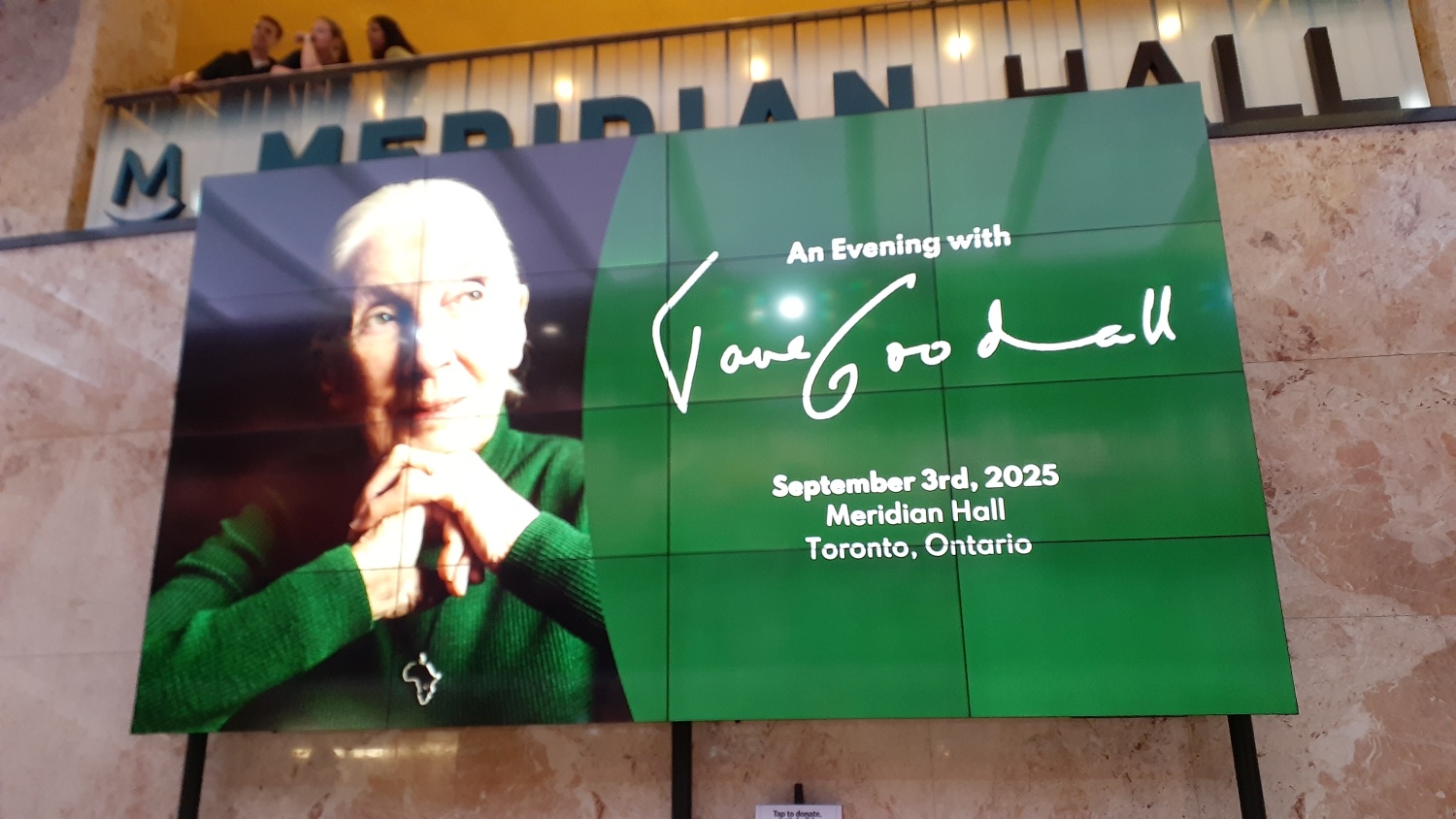
That Wednesday should have been an ordinary middle-of-the-week day. Except for those two words uttered by my morning radio program host: Jane Goodall. Plus: Toronto this evening.
I stopped everything I was doing to get the venue. Jane Goodall was coming to Toronto.
For someone like me who have been fascinated with ants and nature since a toddler, who could be found at the crown of any tree, who still goes out with a pair of binocular to watch the skies, Jane Goodall, who started her magnificent, long-standing work studying chimpanzees the year of my birth, and this, without a diploma, is a heroine.
So what if the transit from my place to the Meridian Hall took more than two hours and a half? I bought one ticket and off I went, in the middle of the afternoon, to see a legend. Getting there was a bliss, apart for the hurdle of eating something, anything, before the speech. The Meridian Hall offered drinks and food, but I didn’t know it and lost stomach-grumbling time at a café, before deciding to use some plastic for a hearty beverage.
Somehow, I had bought a seat very well located. I sat in an ambiance filled with the quiet sound of a distant jungle.
The introduction is done by five young people of the Foundation, which count a Canadian branch. Because, this is not only about African countries, but everywhere. If you do not respect the first Nations who took care of the land, you can’t heal the same land.
That is the lynch point of the Institute : you can’t protect the environment while ignoring the needs of the people residing on the earth. You can’t come to a village where the children are hungry and tell them what to do. All projects of Jane Goodall Institute involves the people living on the territory.
When we put local communities at the heart of conservation, we improve the lives of people, animals and the environment.
Jane as a storyteller
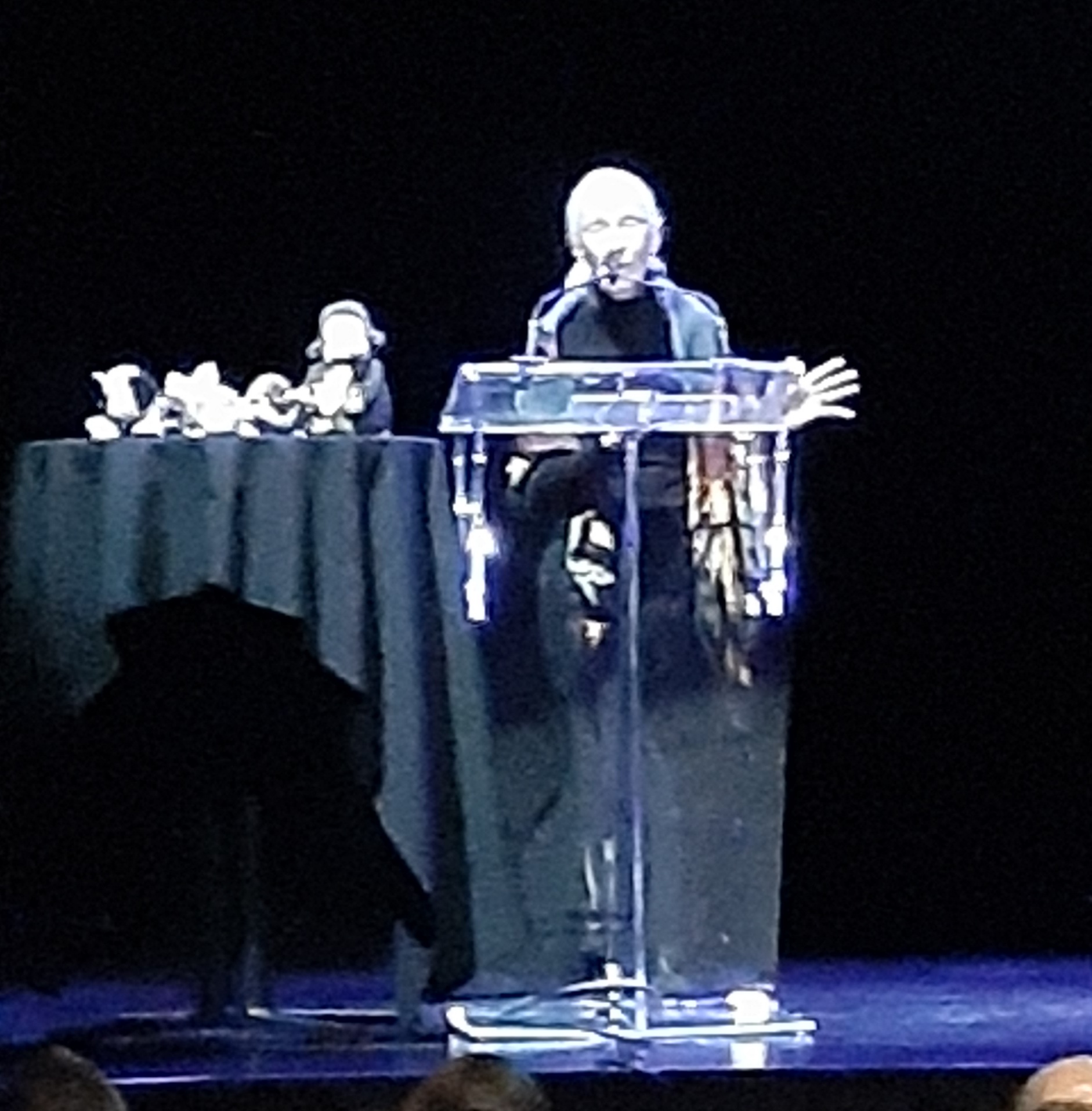
Jane, was finally introduced in a thunder of applause. At 91 years-young, she walks without aid and talks with enthusiasm. Jane Goodall gave an electifying, uplifting speech in Toronto.
She regaled us with anecdotes from her childhood in Britain, of growing up in WWII with rations, reminding us that TV had not been invented at the time. Her mother and aunts were very liberal, letting the little girl roam, and not calling the police when little Jane disappeared for four hours, finally emerging from the coop because she wanted to see how the hens could produce their big eggs!
(I did disappeared once. I had been playing with a friend in the parc, and she had invited me at her home to play, and I ended up staying for supper. On my return to our apartment block, I found two police cars and my mother frantically gesturing. Did I warn her ? Oops.)
Nature fascinated the little Jane, and she knew she wanted to be near animals. At ten, she was a ravenous reader, and one day, she found a novel that embodied all the adventure she dreamed of. Tarzan of the Apes. She fell in love with the “Lord of the Jungle” until…
“He wedded the WRONG JANE!” she said, sending all of us roaring with laughter.
At a point, she was invited by a relation to Africa, and worked as a waitress to save for the boat ticket (there were planes, but too expensive and rare.) And finally, she got her first contact with Africa, South Africa to be precise.
She returned home, eager to get a job close to the animals, but without a diploma? Eventually Louis Leakey invited her to assist as a secretary. And she got introduced to scorpions, snakes, baboons and,… an ambling rhinoceros! On those occasions, she managed to stay calm, that prodded Leakey to assign her to observing the chimpanzees. Without a diploma.
But here was a problem, In 1960, letting a young woman alone in the jungle (even with a crew) was a no-no. So, who came to chaperone Jane?
Her MOM! Yup, she stayed as long as necessary, even if the elder Goodall did not care for the scorpions, snakes and various samples of the local fauna. But she managed to write (she was a novelist) and even opened a small clinic to dispense very basic band-aid care.
And so, her marvelous work started to gain attention with the National Geographic endorsement that came on… July 14th, 1960. Ahem.
Keeping Hope
Jane is not blind to the current world state, and she mentioned the war and genocide occurring in Ukraine, Soudan and Gaza. His interviewer, radio host Georges Stroumboulopoulos, tells her: You’re not afraid to say that? And she replied: I don’t care (who is offended.)
I didn’t know, but Jane, who was vegetarian for a long time, has become vegan since a few years, like Georges is. She showed us plush animals, a chimpanzee, an octopus, a pork, a jungle rat, each having intelligence and capacities. Farm animals are sentient, and often sapient, too. We can act, in things as small as consuming a plant-based diet, better for the animals and the planet.
How can you stay so hopeful when the world is burning? (Nor exactly that phrasing). Jane gives us the reasons;
First, the younger generation is growing up and resilient. Second, the human indomitable spirit and our intellect that can find solutions to problems.
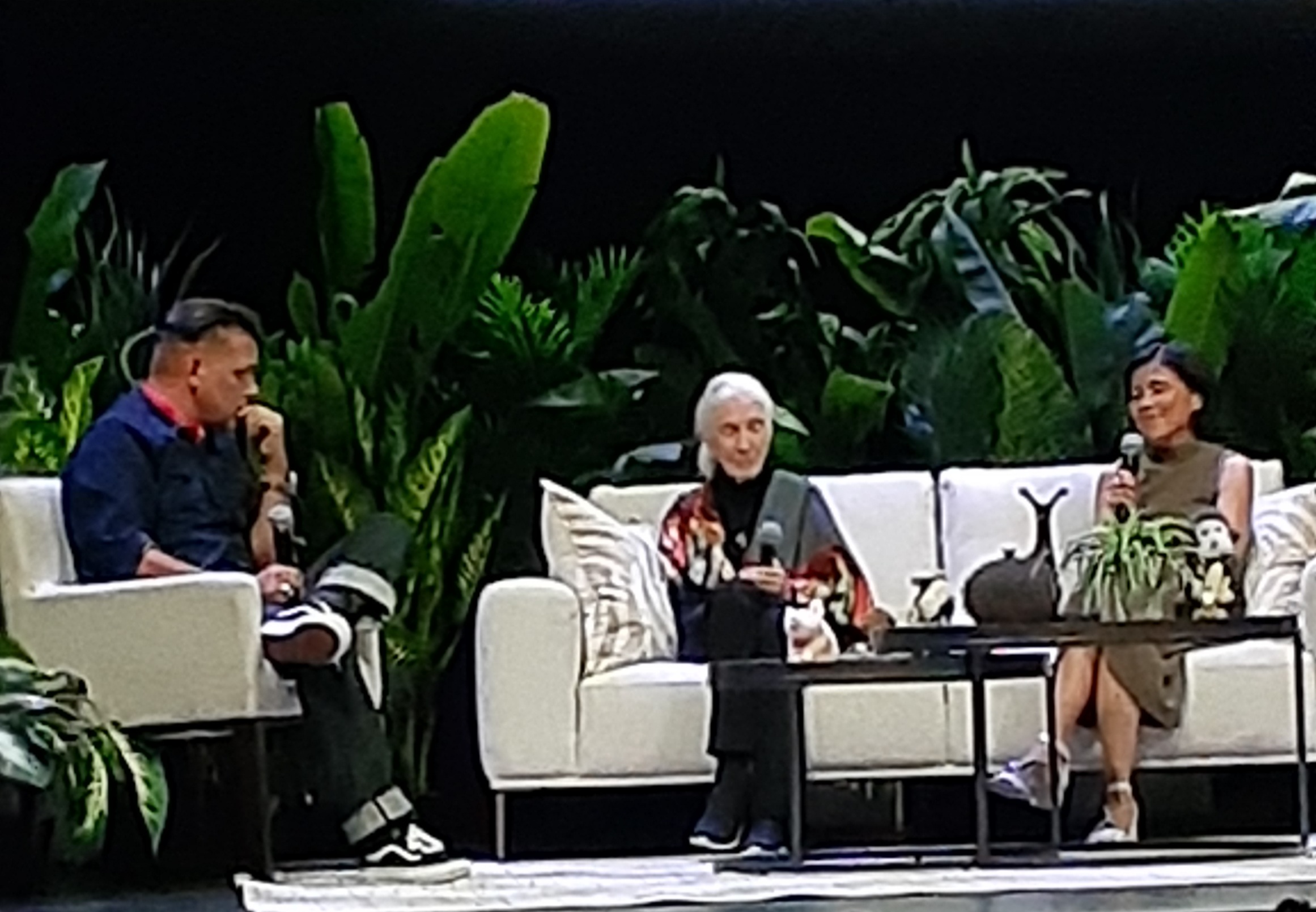
And she added uplifting examples of hope: of children planting trees in war-torn countries, of the Gombe forest (in Tanzania) that had almost disappeared due to over cut in the 1980s, and that grew back on the hills. Roots & Shoots is a global youth leadership program that exists in more than 140 countries. Through Roots & Shoots, participants identify and address problems in their communities.
Helping people to improve their lives also helps the nature around. And do not stop acting to the best of your knowledge, to help people, the environment and the animals. Even in small things.
I left the Meridian Hall in a happy mood. It was worth the five hours total of public transit.
To discover more about the Jane Goodall Institute, go here. And for more words of hope, go below!
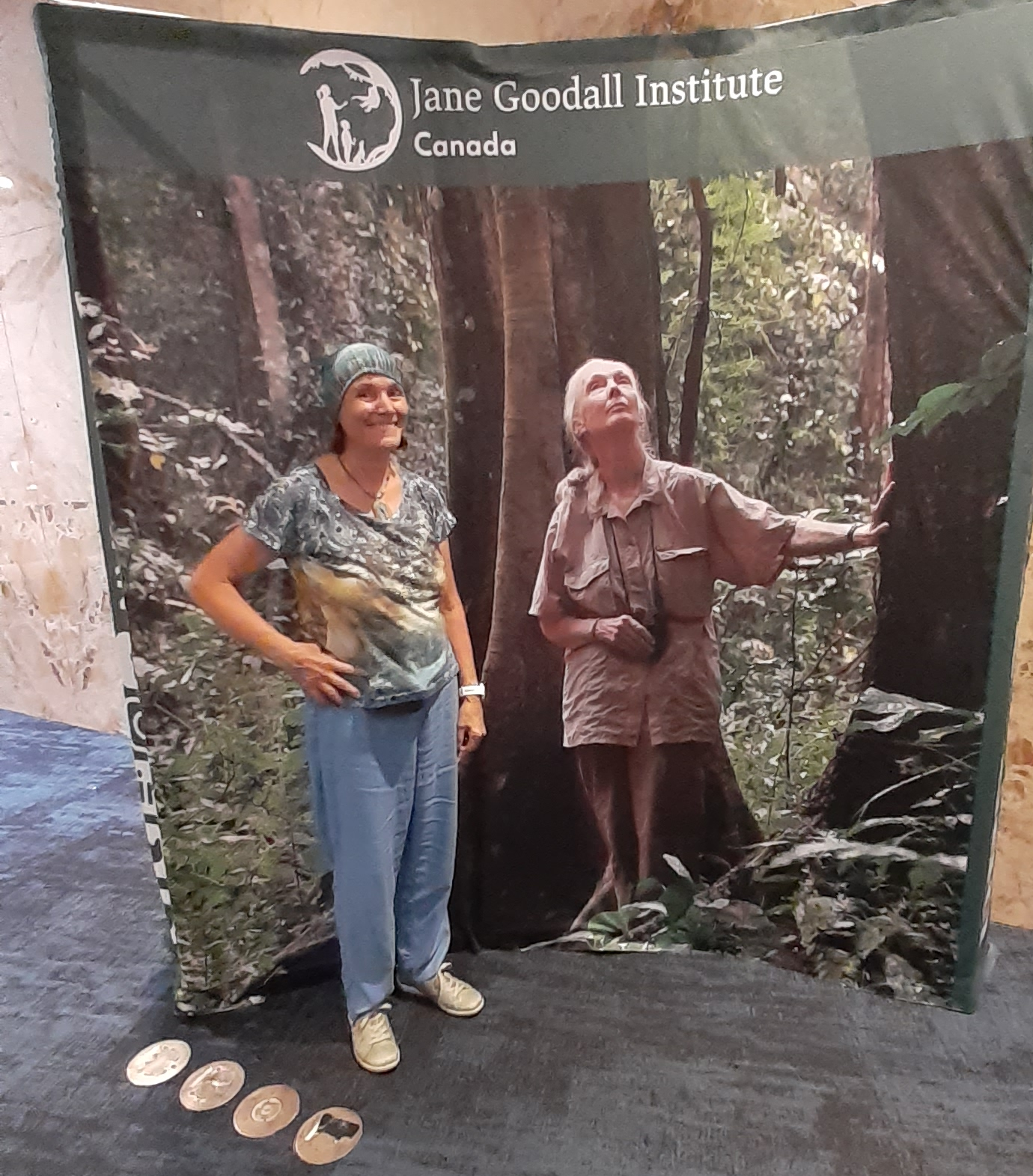
The Sunday Artist is Michèle Laframboise, artist and SF writer.








 Echoes of a Sunday artist