Category Archives: Environment

Yes, Eco-SciFi is a Thing!

Greetings,

Having a solid formation in natural science, I can’t just sit there and looking at the mega billionaires destroying our cohesive society… and the planet.

So this blog entry is basically a big YAY to Nina Monteanu and several SF writer colleagues who offer many paths to climb out of the hole we dug for ourselves. I am endeavouring to contribute to this SF field, but I have mostly short-stories as my ecological SF contribution.

I was invited to contribute to the blog Reality Skimming, about sustainability and writing science fiction. Especially I like the sustainability before ambition headline. It is something I strive to achieve with my own publiching house. The Sustainability thread is a thematic series of articles, curated by Canadian SF author Nina Munteanu and sponsored by Reality Skimming Press.
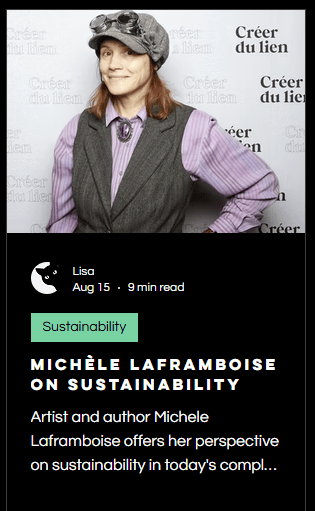
Some questions were more challenging for me than others, because I had less time as before to consult the numerous online resources. But I loved to be able to expand on ways that my work as a publisher can be sustainable. All my Echofictions paper books are printed in Canada and a list at the end encourages readers to pass it on.

The article is about 9 minutes of reading, including an excerpt from a YA novel, there.

https://www.realityskimming.com/post/mich%C3%A8le-laframbroise-on-sustainability

A few Eco Sci-Fi books I read :
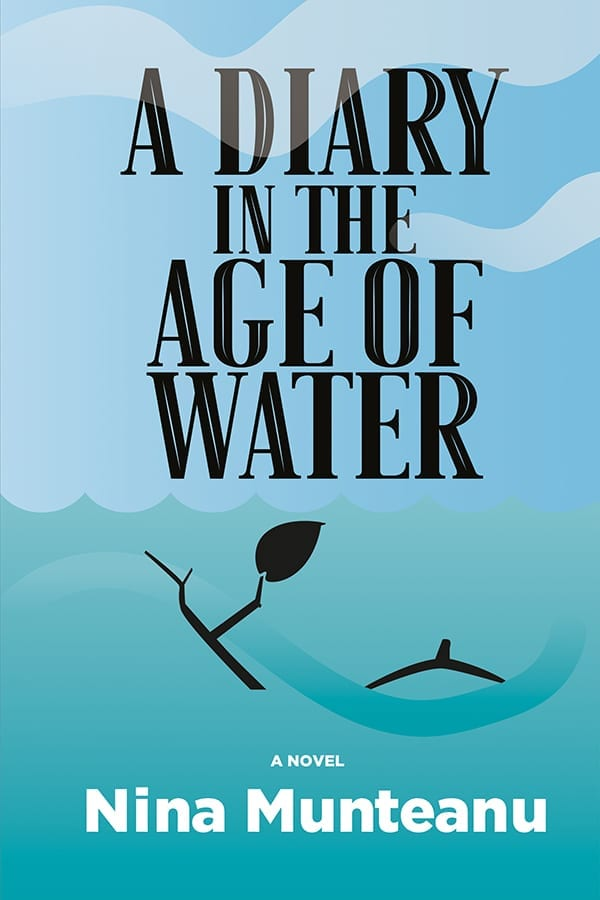
A Diary in the Age of Water by Nina Monteanu (Inanna Publications, 2020): a dystopia that show us “a future shaped by water scarcity, societal collapse, and ecological memory” (well said by Kyo Hwang Cho ). It was a bit hard for me to read because I get attached to the fallible characters, but Nina is an author who doesn’t pull her punches. She knows her stuff. I do endeavour to save and protect water in my everyday use, and after reading this book, you will, too!
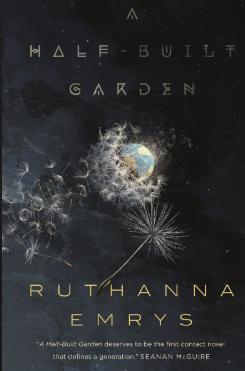
Dandelion, dandelion, dandelion… what’s not to love in that gorgious cover?

A Half-Built Garden, by Ruthanna Emrys, explores a First contact situation with aliens who have a very maternal notion of family. The narrator lives in region divided in watersheds where the water and resources are managed toward healing the environmental disasters. But there are also libertarian pockets and old nation-states who would just looove to get their mitts on the alien tech… Aliens convinced that humanity should leave the wounded planet to survive! There is a nice concept of dandelion-style organization in that slow-burn and deeply reflective story.
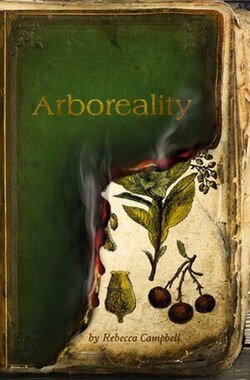
Arboreality, by Rebecca Campbell, Stelliform Press 2022. A very advanced tree species spread everywhere. Set in Britisth Columbia over several decades, so you get to live in this changing landscape with the protagonists.
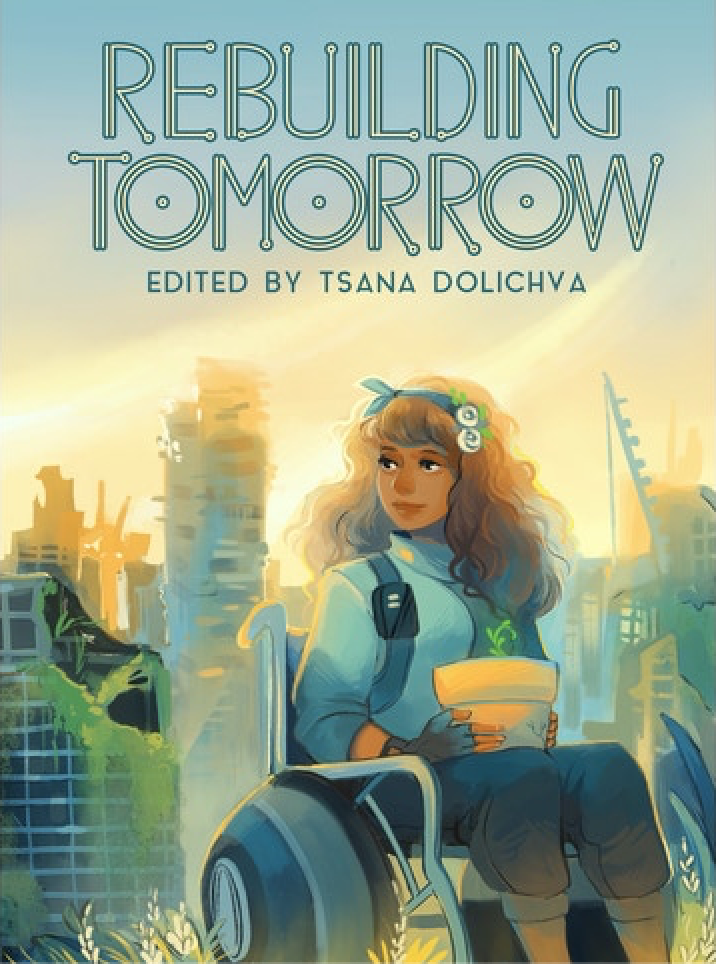
Rebuilding Tomorrow, Anthology ed. by Tsana Dolichva (Twelfth Planet Press). A collective by dis-abled writers with savvy protagonists living with a visible or invisible handicap. I must admit the cover art is to die for!
“An anthology of apocalypse fiction featuring disabled and chronically ill protagonists, proving it’s not always the “fittest” who survive, it’s the most tenacious, stubborn, enduring and innovative characters who have the best chance of adapting when everything is lost.” The stories show how people with different abilities can help each other, even after a catastrophic event. As a more “valid” reader, I had difficulties in one or two stories guessing what was ailing the protagonist… who, of course, were on the “autistic spectrum” (neurodiverse) with their own perceptions and ways of thinking.
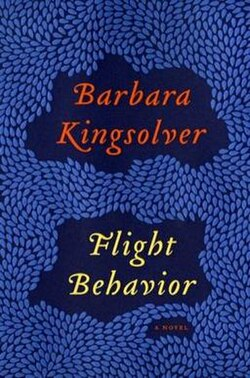
Flight Behavior by Barbara Kingsolver. Not SF, but an eco-fiction novel about a wayward colony of Monarch butterflies choosing a hibernating site too much in the North, and the farming woman who discover them, also beset with her own worries. A novel about how climate changes affects migration, and also a social commentary.
I always tell people that The Great American Novel has been written: it’s Flight Behavior.
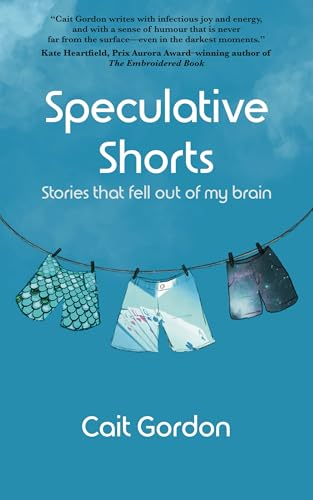
Speculative Shorts: Stories that fell out of my brain, by Cait Gordon, Dinsdale Press. The environment is not the main subject, but a collection of fifteen tales of queer life, disability, romance, power, defiance, and resilience cannot go around the destruction. And because I like the story, refreshing. Fun to read!
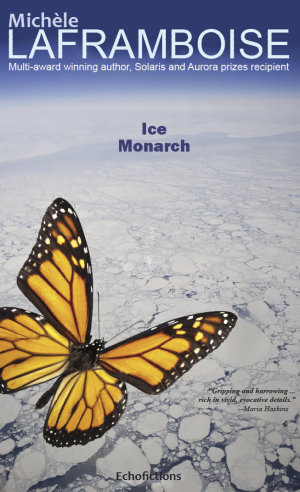
Ice Monarch, my own first clim-SF dystopia (2010, 2012, 2014, 2017). A 2010 Solaris Prize Winner short-story that got published in four magazines: in French (twice), in Russian and in English. A cyborg butterfly flies over the devastated Earth, in search of images to transmit to his masters living in palaces roaming the artificial ice of the poles. Soon, a dilemma presents itself to the cyborg, because helping survivors is not in the master’s agenda. Be warned, the mood is more poetical and somber.

Come here for the French edition: https://echofictions.com/products/monarque-des-glaces

And of course, I love Monarch butterflies!

More books on https://echofictions.com
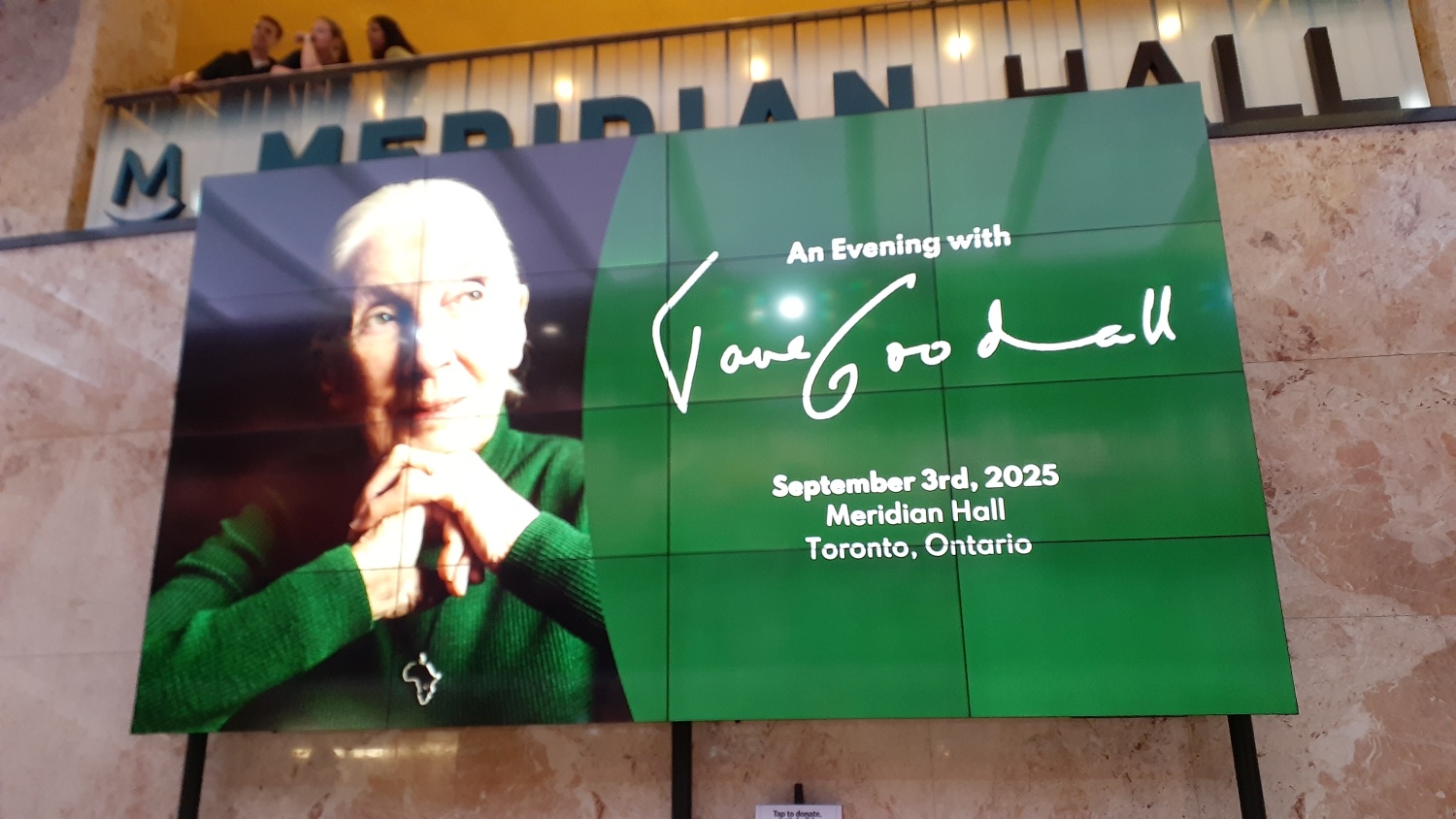
An Evening with Jane Goodall in Toronto

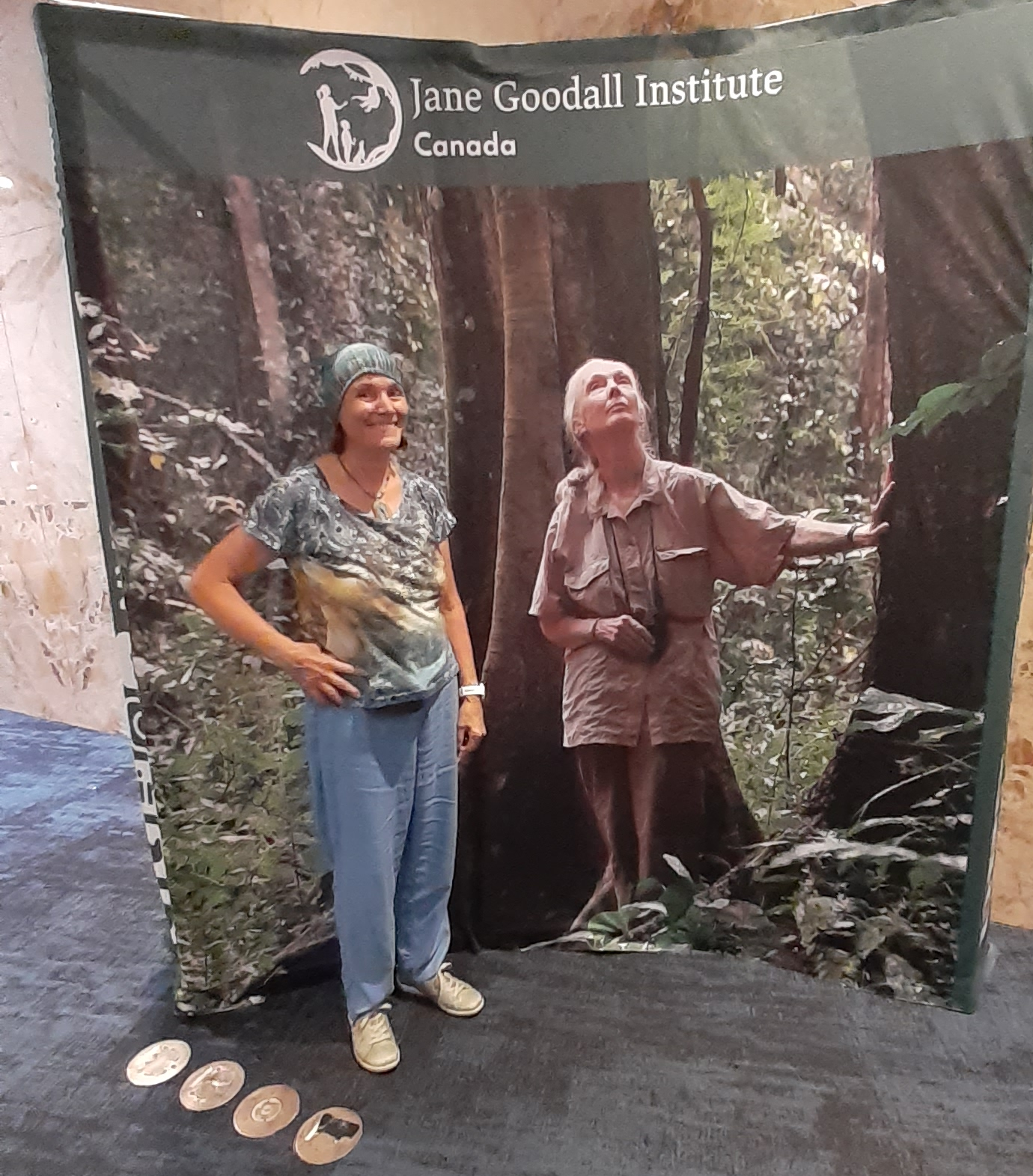
The screen in vivid green that greets us. I love the little Africa-shaped pendant!

That Wednesday should have been an ordinary middle-of-the-week day. Except for those two words uttered by my morning radio program host: Jane Goodall. Plus: Toronto this evening.

I stopped everything I was doing to get the venue. Jane Goodall was coming to Toronto.

For someone like me who have been fascinated with ants and nature since a toddler, who could be found at the crown of any tree, who still goes out with a pair of binocular to watch the skies, Jane Goodall, who started her magnificent, long-standing work studying chimpanzees the year of my birth, and this, without a diploma, is a heroine.

So what if the transit from my place to the Meridian Hall took more than two hours and a half? I bought one ticket and off I went, in the middle of the afternoon, to see a legend. Getting there was a bliss, apart for the hurdle of eating something, anything, before the speech. The Meridian Hall offered drinks and food, but I didn’t know it and lost stomach-grumbling time at a café, before deciding to use some plastic for a hearty beverage.

Somehow, I had bought a seat very well located. I sat in an ambiance filled with the quiet sound of a distant jungle.

The introduction is done by five young people of the Foundation, which count a Canadian branch. Because, this is not only about African countries, but everywhere. If you do not respect the first Nations who took care of the land, you can’t heal the same land.

That is the lynch point of the Institute : you can’t protect the environment while ignoring the needs of the people residing on the earth. You can’t come to a village where the children are hungry and tell them what to do. All projects of Jane Goodall Institute involves the people living on the territory.

When we put local communities at the heart of conservation, we improve the lives of people, animals and the environment.

Jane as a storyteller

Jane, was finally introduced in a thunder of applause. At 91 years-young, she walks without aid and talks with enthusiasm. Jane Goodall gave an electifying, uplifting speech in Toronto.

She regaled us with anecdotes from her childhood in Britain, of growing up in WWII with rations, reminding us that TV had not been invented at the time. Her mother and aunts were very liberal, letting the little girl roam, and not calling the police when little Jane disappeared for four hours, finally emerging from the coop because she wanted to see how the hens could produce their big eggs!

(I did disappeared once. I had been playing with a friend in the parc, and she had invited me at her home to play, and I ended up staying for supper. On my return to our apartment block, I found two police cars and my mother frantically gesturing. Did I warn her ? Oops.)

Nature fascinated the little Jane, and she knew she wanted to be near animals. At ten, she was a ravenous reader, and one day, she found a novel that embodied all the adventure she dreamed of. Tarzan of the Apes. She fell in love with the “Lord of the Jungle” until…

He wedded the WRONG JANE!” she said, sending all of us roaring with laughter.

At a point, she was invited by a relation to Africa, and worked as a waitress to save for the boat ticket (there were planes, but too expensive and rare.) And finally, she got her first contact with Africa, South Africa to be precise.

She returned home, eager to get a job close to the animals, but without a diploma? Eventually Louis Leakey invited her to assist as a secretary. And she got introduced to scorpions, snakes, baboons and,… an ambling rhinoceros! On those occasions, she managed to stay calm, that prodded Leakey to assign her to observing the chimpanzees. Without a diploma.

But here was a problem, In 1960, letting a young woman alone in the jungle (even with a crew) was a no-no. So, who came to chaperone Jane?

Her MOM! Yup, she stayed as long as necessary, even if the elder Goodall did not care for the scorpions, snakes and various samples of the local fauna. But she managed to write (she was a novelist) and even opened a small clinic to dispense very basic band-aid care.

And so, her marvelous work started to gain attention with the National Geographic endorsement that came on… July 14th, 1960. Ahem.

Keeping Hope

Jane is not blind to the current world state, and she mentioned the war and genocide occurring in Ukraine, Soudan and Gaza. His interviewer, radio host Georges Stroumboulopoulos, tells her: You’re not afraid to say that? And she replied: I don’t care (who is offended.)

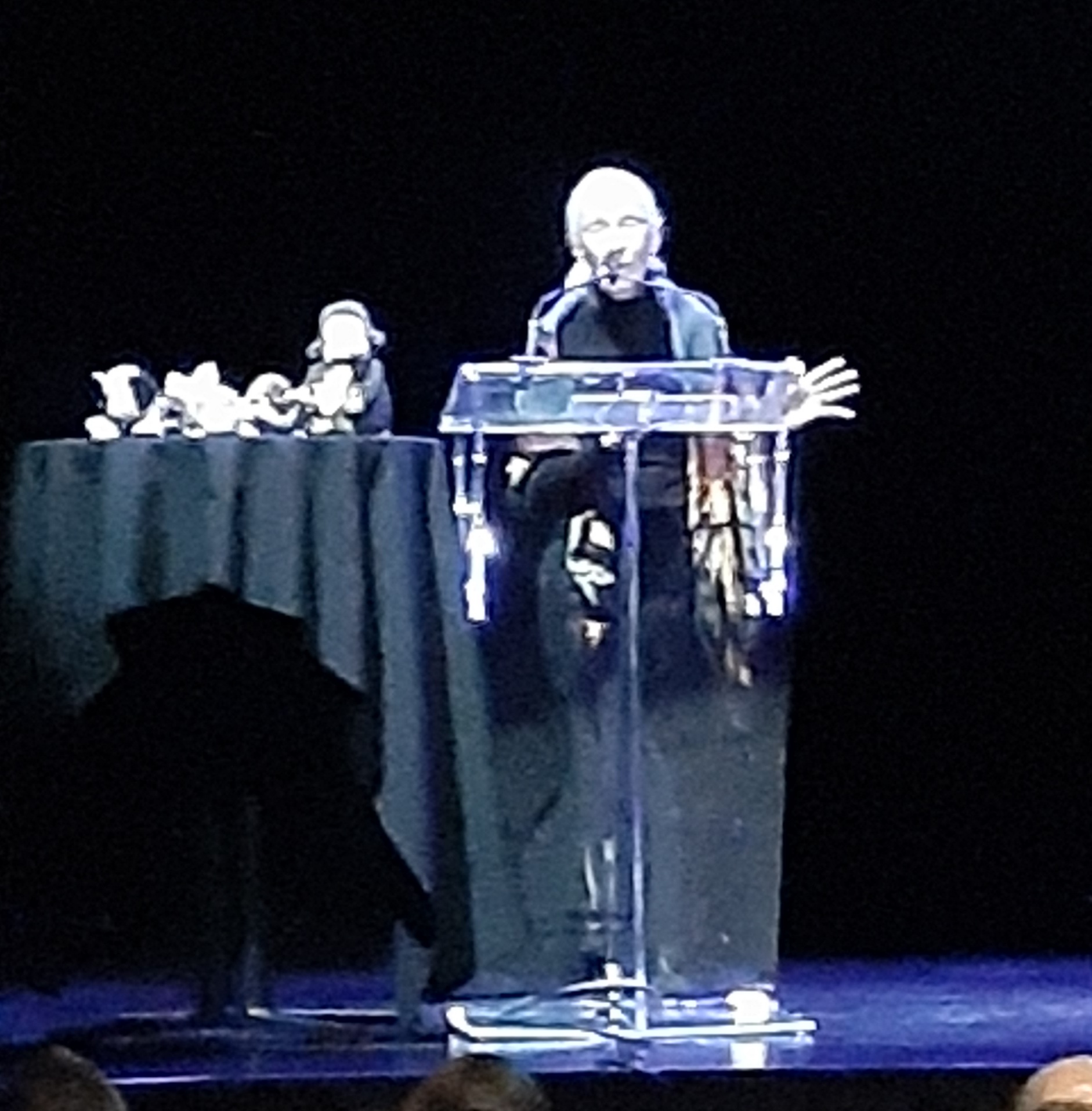
I didn’t know, but Jane, who was vegetarian for a long time, has become vegan since a few years, like Georges is. She showed us plush animals, a chimpanzee, an octopus, a pork, a jungle rat, each having intelligence and capacities. Farm animals are sentient, and often sapient, too. We can act, in things as small as consuming a plant-based diet, better for the animals and the planet.

How can you stay so hopeful when the world is burning? (Nor exactly that phrasing). Jane gives us the reasons;

First, the younger generation is growing up and resilient. Second, the human indomitable spirit and our intellect that can find solutions to problems.

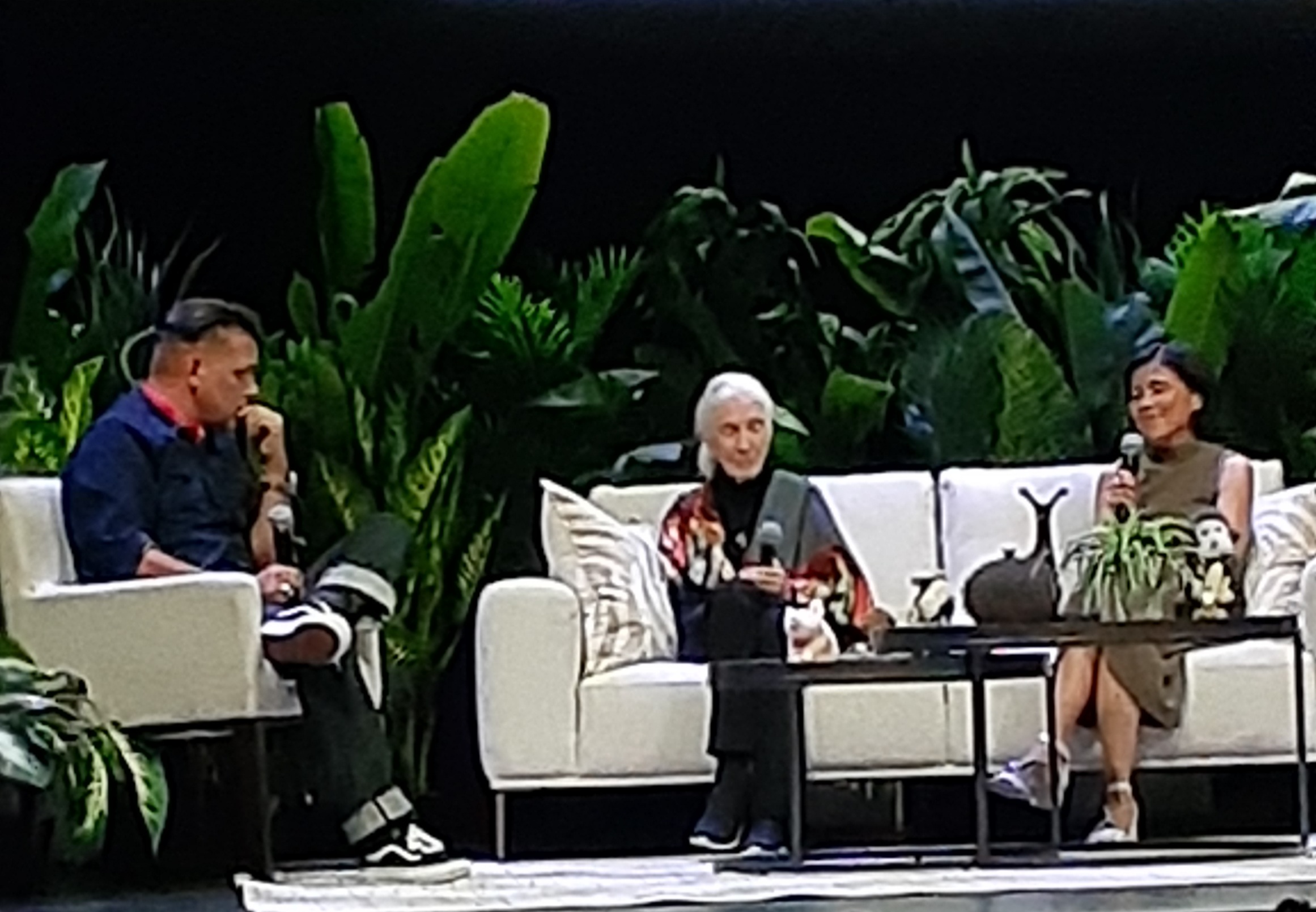
Photo from my seat. Georges Stroumboulopoulos, Jane Goodall, and the head of the Institute in Canada.

And she added uplifting examples of hope: of children planting trees in war-torn countries, of the Gombe forest (in Tanzania) that had almost disappeared due to over cut in the 1980s, and that grew back on the hills. Roots & Shoots is a global youth leadership program that exists in more than 140 countries. Through Roots & Shoots, participants identify and address problems in their communities.

Helping people to improve their lives also helps the nature around. And do not stop acting to the best of your knowledge, to help people, the environment and the animals. Even in small things.

I left the Meridian Hall in a happy mood. It was worth the five hours total of public transit.

To discover more about the Jane Goodall Institute, go here. And for more words of hope, go below!

A fun little picture with our heroine. (Of course, nobody wants to crowd Jane, so this is good solution.) Pic taken by a nice visitor, Lisa.

The Sunday Artist is Michèle Laframboise, artist and SF writer.

Signing Books at Blooming Boulevards (Why Non-Lit Events Rule!)

At certain times, science-fiction and gardening afficionados do mix!

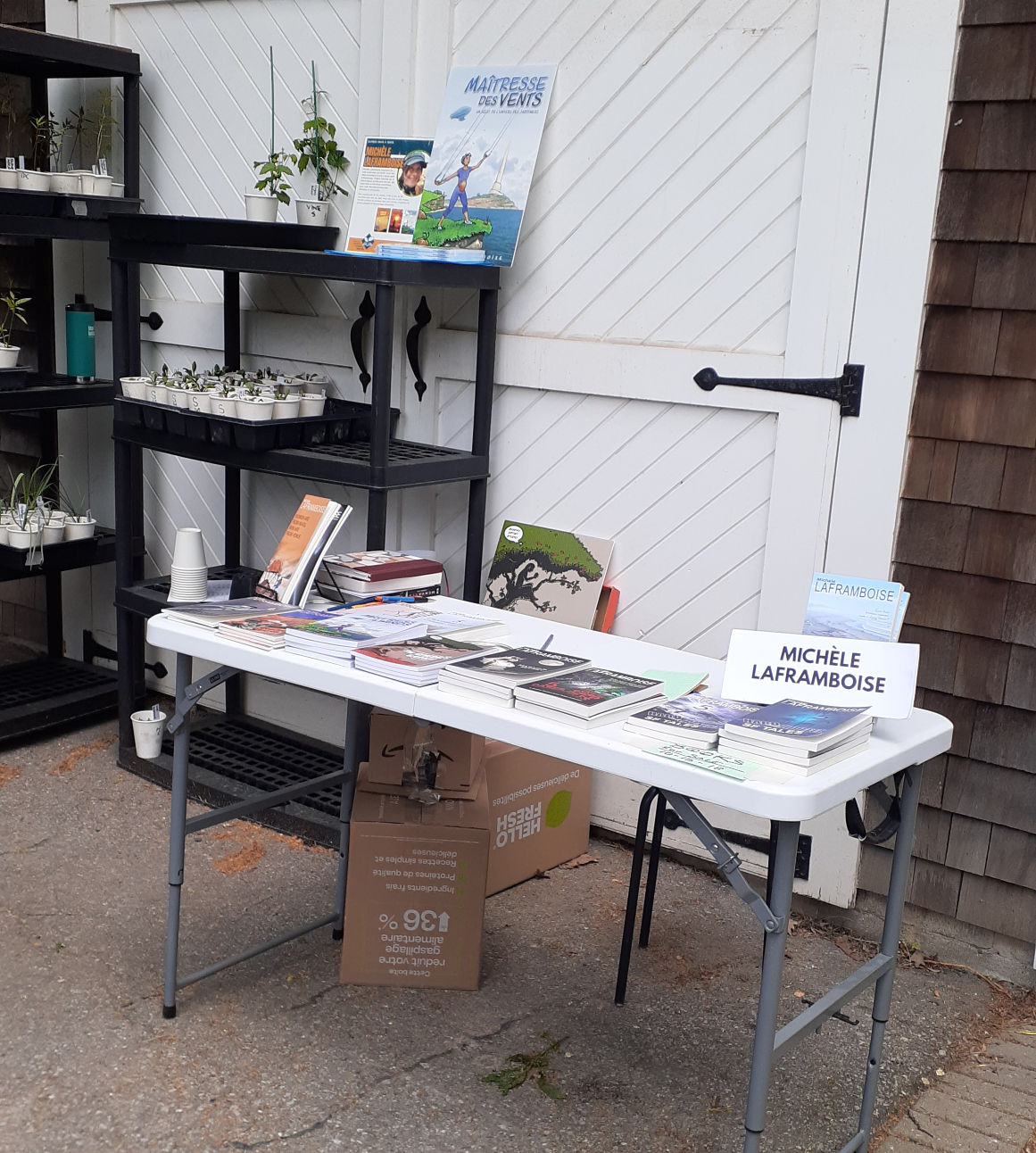
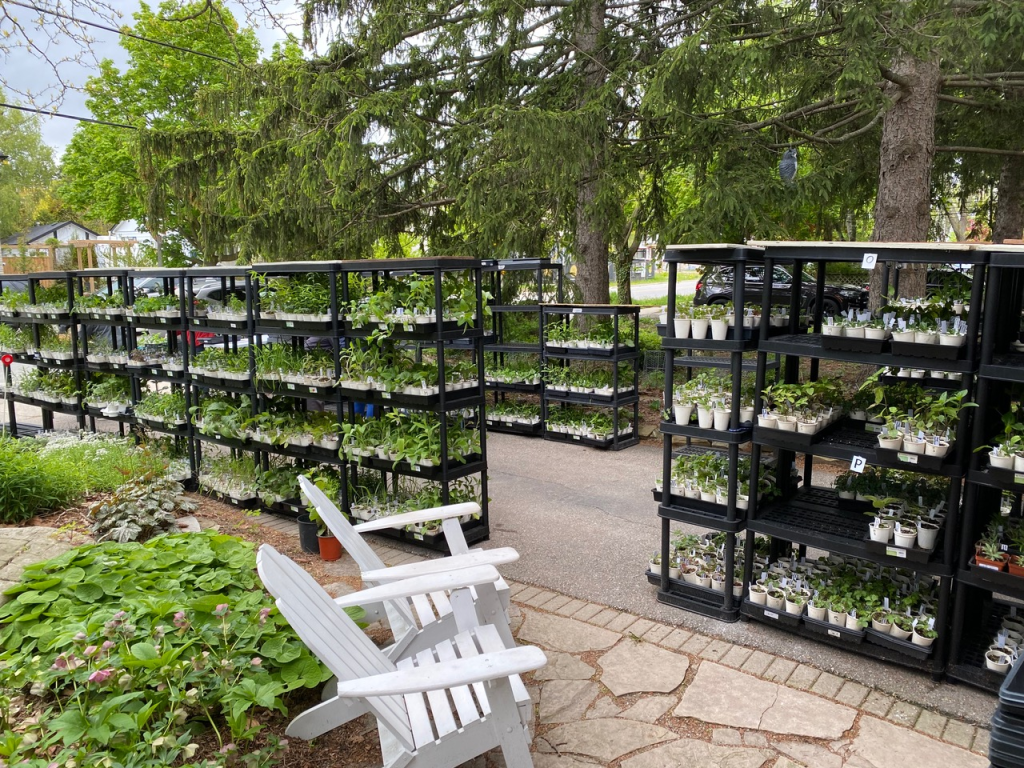
I had a wonderful weekend meeting new readers at the Blooming Boulevard annual native plant sale. Here’s my table by Sunday. My Gardeners’ civilization SF graphic novels were a hit, as were my birdwatching stories!

Two years ago, I was impressed by a neighbour’s indigenous plants garden, set in the grassy band between the sidewalk and the street. As a staunch environmentalist, I was considering doing the same with my own curb band. But, book fairs and deadlines loomed, and I missed the opportunity.

According to the Blooming Boulevards web page:

It took me two summers to gather the courage and contact the founders. And then, everything went fast, as Jeanne and Wayne came to see my modest space, and drew up a plan for indigenous plants, and gathered the forms to get an “encroachment” permit from the City. This was at the end of April.

This as how the space looked before I took out the grass. There were steps well explained before planting.

Before…
And after! The completed garden.

Now, I must be patient to allow those plants work on their roots before investing in foliage and flowers. Stay tuned for next year!

When the nice Blooming Boulevards people learned I was a writer, and when they saw my Gardeners’ Universe graphic novels, they invited me to sit at their annual plant sale!

The plant sale. My table was to the right of those chairs

And, ooh , that went so incredibly well!

The signing table on Saturday, a little cramped, but they put my publishing company sign up!

I did not have any expectation beside talking to gardeners who are better at their hobbies than I am. In most literary events, I am used to people ignoring my table.

Not here.

Visitors were intrigued and many stopped by (if their arms were not loaded with seed boxes!) And some gardeners were also science fiction readers, so I gained new fans! Two people even went back on Sunday to get my books signed!

One colour pencils signing of Mistress of the Winds, available in electronic format here along with my other books.

It is very rare that half the books I bring at any event fly out, but it happened here.

My esteemed colleague writer and indie publisher Mark Leslie Lefebvre regularly attends non-lit events in his home area, and I can now confirm that it is worth my time.

The advantages of a non-lit event:

  1. No competition for attention… or annoying table neighbours
  2. No long& costly trip to get on site (it’s in the same city!)
  3. A good-natured, friendly ambience
  4. I met fantastic people and gained new friends!

So, in retrospect, because of the common interests, I think the nice fellows of BB are my kind of crowd. I’ll certainly be back next year!

#bloomingboulevards @bloomingblvds #Mississauga #writinglife #indigenousplants

To know more about this initiative: https://www.bloomingboulevards.org/about

A Disquieting Truth about PFOAs (or why you should take a good look at your non-stick pan… )

My formidable SF writer colleague Nina Monteanu has penned this very well-researched article (link below), something I wished I had done more often, about the 60-years cover-up of the deleterious effects on human health of the Dupont-produced PFOAs. PFOAS were present in the non-stick “teflon” pans, but also, alas, contaminated the employees in their assembly lines, and leaked into municipal waters…

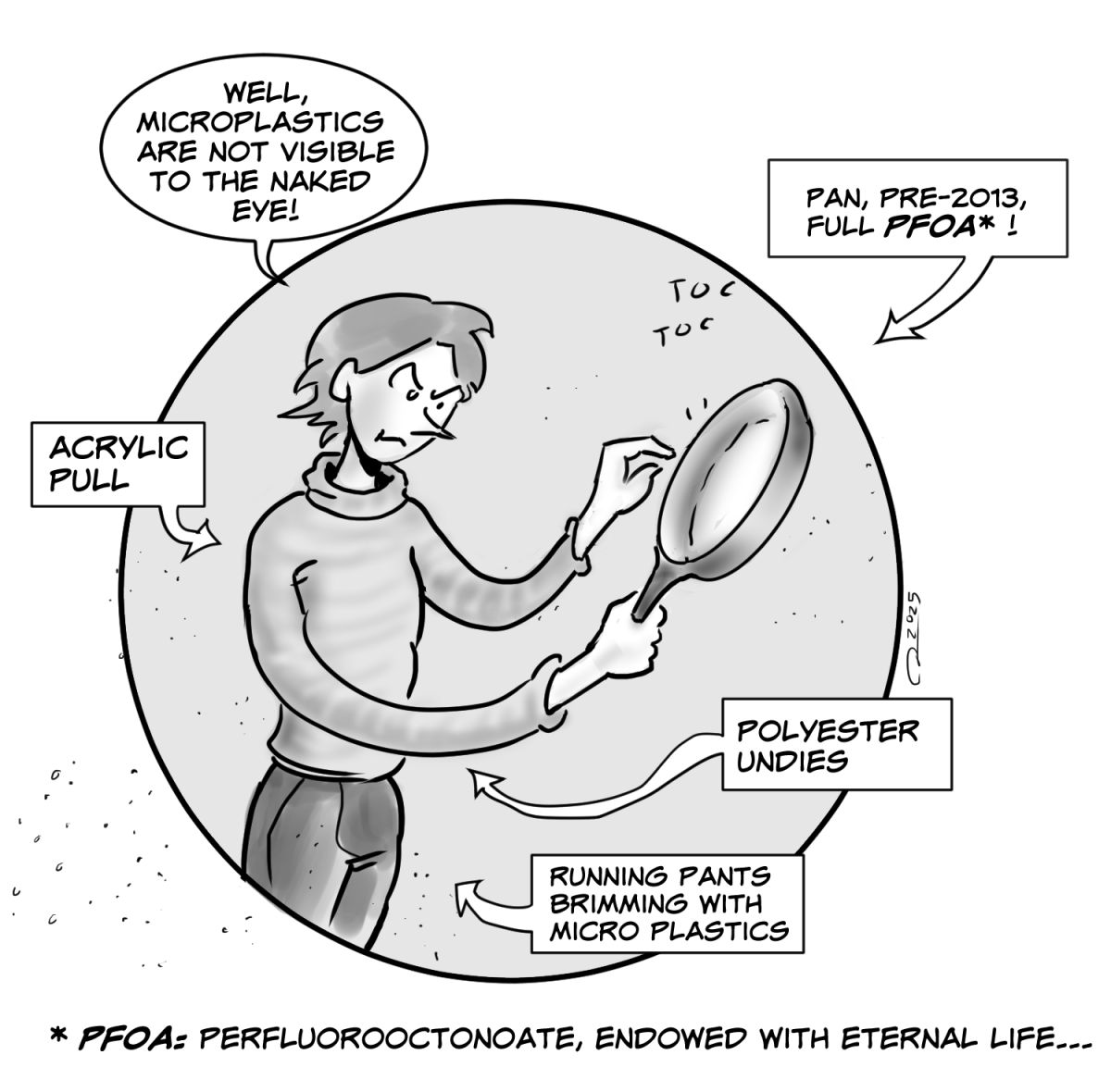
WARNING: It is a chilling reading, but necessary. Because I did innocently use PFOAs each time I cooked with my 25-year old non-stick pan. Needless to say I promptly discarded it.

Most companies have changed the recipe, but there no guarantees the “new” improved replacement products will be harmless! So, stick to stainless steel and cast iron pans (that can last for generations). Or ceramics interiors.

I used a Canadian maker, Paderno. Aluminum core englobed in three-ply stainless steel. Or the new hybrid-clad , non-stick raised stainless steel pattern and PFOA-free. The pattern grid let you use metal instruments. 

And of course we do wear microplastics everywhere. Our fossil-sourced clothes are leaching micropollutants in the water at each wash. That’s another compounded problem.