Looking back, here are my contributions to the larger field of SF in 2024. Several short-stories, one graphic novel, one novella, and the links to the publishers.
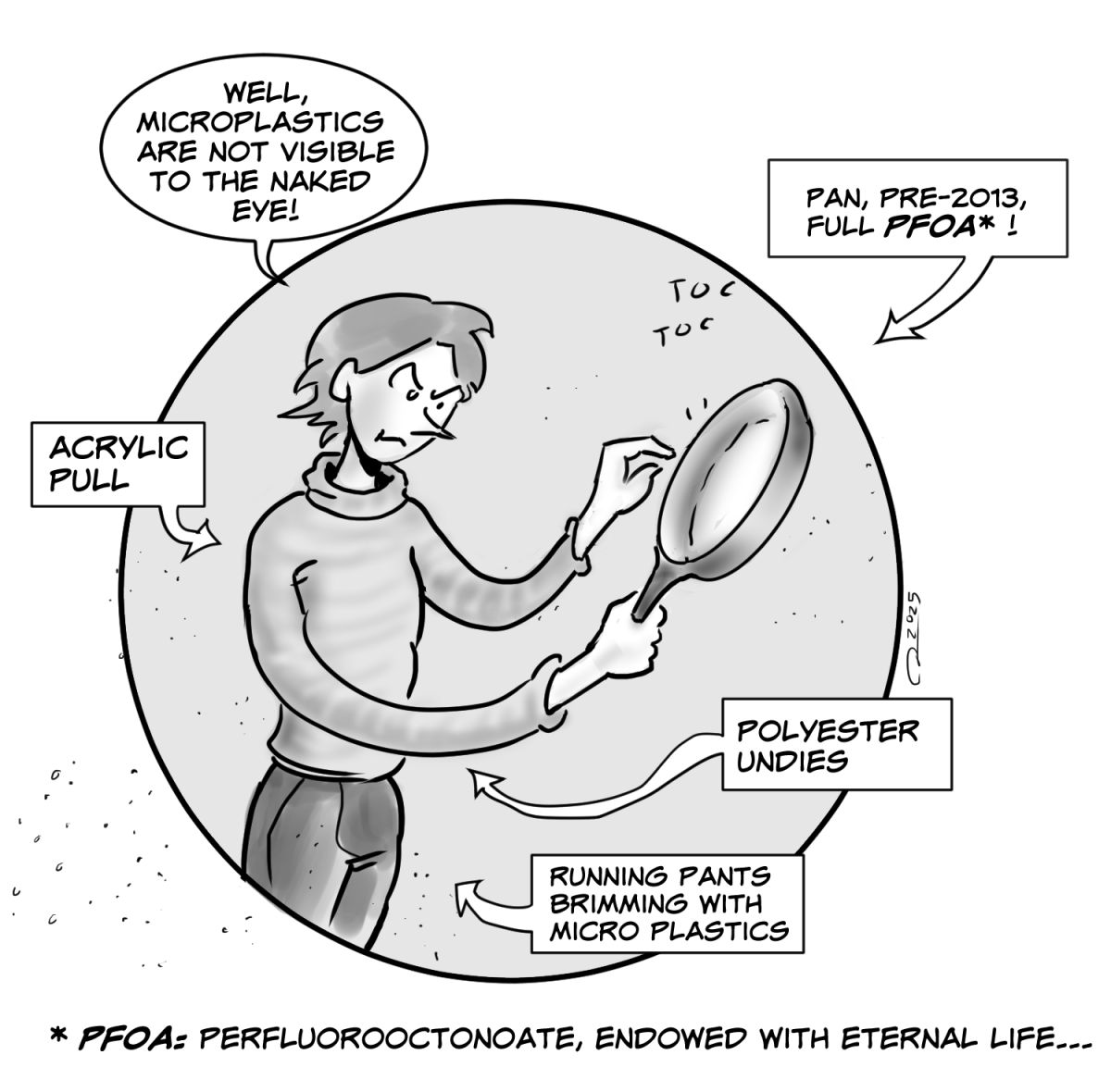
My formidable SF writer colleague Nina Monteanu has penned this very well-researched article (link below), something I wished I had done more often, about the 60-years cover-up of the deleterious effects on human health of the Dupont-produced PFOAs. PFOAS were present in the non-stick “teflon” pans, but also, alas, contaminated the employees in their assembly lines, and leaked into municipal waters…
WARNING: It is a chilling reading, but necessary. Because I did innocently use PFOAs each time I cooked with my 25-year old non-stick pan. Needless to say I promptly discarded it.
Most companies have changed the recipe, but there no guarantees the “new” improved replacement products will be harmless! So, stick to stainless steel and cast iron pans (that can last for generations). Or ceramics interiors.
And of course we do wear microplastics everywhere. Our fossil-sourced clothes are leaching micropollutants in the water at each wash. That’s another compounded problem.
(That post is for all those interested, wheter tyou are eligibile to vote for the Hugos or not. )
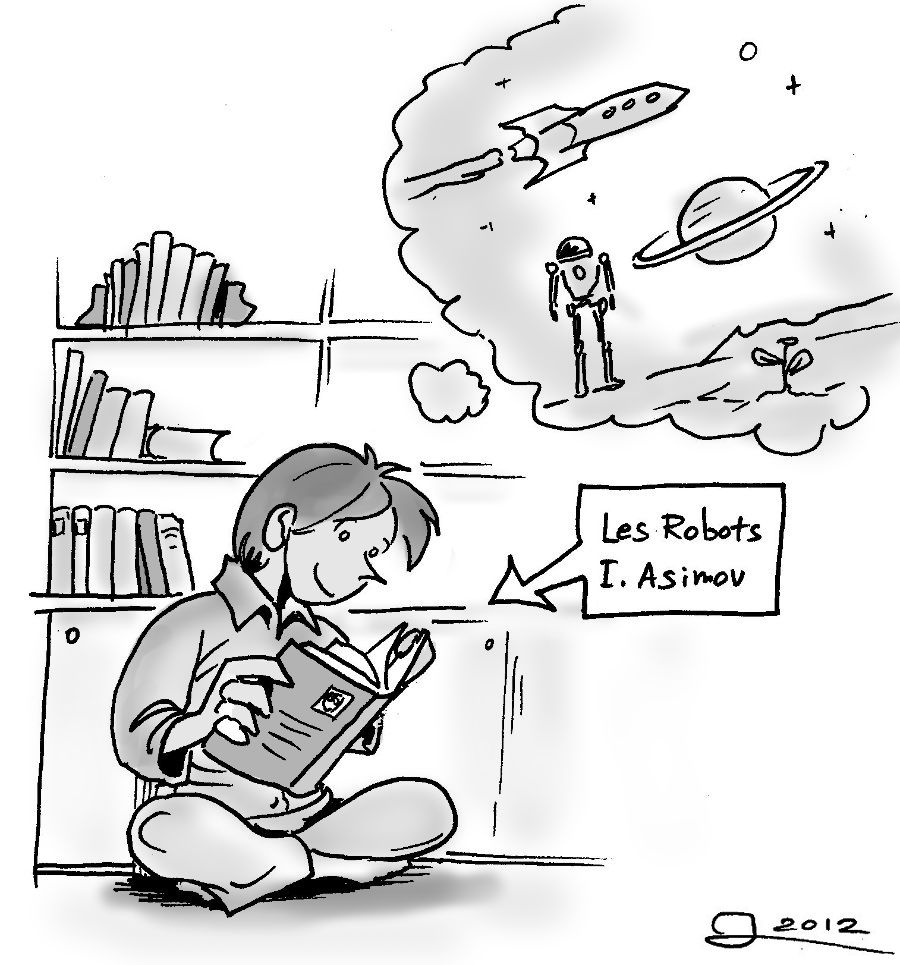
When my dear father Jacques E. Laframboise was very ill, in 2014, we talked a lot about Science fiction, of which he was a avid reader. We were discussing dirigible flight, for my steampunk universe. He was the one to introduce me to the genre, especially with the Asimovian robots. I had gone on to become a scientist then, later, a science-fiction writer.
So there at the hospital, I promised him two things: that one day, I would get published in Asimov’s magazine. Which happened in 2021. The second thing I promised my dad was that, one day, I would hold the Hugo rocket, as a winner.
This might be a far-fetched dream. First, there are many wonderful writers out there who craft deep, original universes and mind-bending plots. Second, winning an award it is less important than telling many good stories. Third, I already have several awards under my belt. But I am still thinking about that promise.
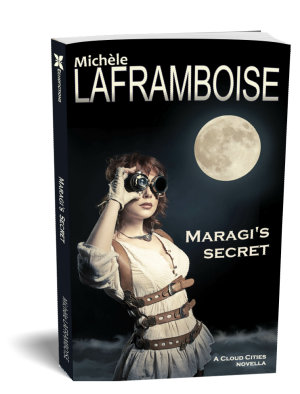
Maragi’s Secret is my first novella-length story published in Asimov’s SF magazine.
So, here are my 2024 publications, and some links to read them. The nomination deadline is March 15th, final voting at the Seattle Worldcon.
Maragi’s Secret, Asimov’s May-June 2024 – 20 000 words
CATEGORY : novella
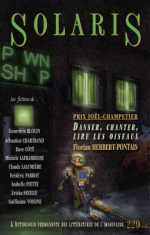
genre: SF steampunk (nothing to do with the big robot on the magazine’s cover!!!)
Short blurb: Maragi learns the ropes as a mast «monkey» aboard her father’s heavily-mortgaged airship, climbing its glacial hull six thousands meters over the poisoned Earth’s surface. She hopes to navigate the endless sky, humanity’s last refuge, but must face the scorn of crewmen who resent her presence. Little do they know the worse fate waiting a motherless girl in the straight-laced, rigid Cloud society.
Then, a fragile secret left by clandestine passengers forces a hard choice on her. Is saving it worth losing everything she cares about?
It all points to the importance of using our creativity, our clever brains, and understanding and comprehension, to create a more sustainable and ethical world in which everyone can make a decent living while existing in harmony with nature.
Jane Goodall wrote those words in the closing address of her Book of Hope. The first edition came out during the pandemic, but it still echoes today.
The Book of Hope: A Survival Guide for an Endangered Planet, is the special Viking hardcover edition by Penguin Random House UK, of 249 pages. I ordered it directcly from The Guardian for a gift, but it is difficult to find now. Some POD with this cover are possible on the big ZON, but I do encourage you to buy from the publisher.
Where to find this book: The Book of Hope: A Survival Guide for an Endangered Planet.
The Celadon edition is available here, along with other formats, with another cover. Celadon is a division of division of Macmillan Publishers, and was the first publisher. The paperback edition (below) had another cover mentioning Gail Hudson, a long-time friend of Jane. The ebook is available on Kobo.
This 272 pages paperback is a compact edition by Penguin (Global Icons Series, 1) from 2022. Go to the publisher page first, Penguin Random House UK, if you want this very inexpensive edition. I always encourage the publishing houses small or big, before the platforms. However, I don’t know why they changed the subtitle to “A Survival Guide for Trying Times“.
As for my own wishes, who are neither horses or spaceships, it is to put as much goodness in every action as you can. Good intentions are nice, but actions are what we see and hear.
May your thoughts and actions sustain hope in the new year!
Michèle happily tapping away in a Montréal hostel in 2018
In January 2022, I gave a presentation in French about self-publishing, aimed at people either retired or close to retirement. All were interested in publishing their book and or memoirs. As I had started my own indie company Echofictions to make my published books and short-stories available, I could help them navigate the main hurdles on the way to get a book published, starting with the ISBN number.
Why writing a memoir is not a simple hobby
As history goes, most of what make up our daily lives vanishes quickly after our passing. The “big” history deals about big events (and wars, and colonisation) but this is not by far the whole fabric of our lives. And I am currently doing a research for an historical novel set in my own city, Mississauga, in 1979. Even if I remember that year, a lot of details get lost.
We are barely discovering through archival and legal papers, the everyday life of our ancestors. Some journals are unearthed. But even one or two generation spans can be difficult to recall. So this spurred me to call out, “write what you can about your parents, friends, and grandparents!”
Because you never know what will spark interest of the next generation, or the future historians!
You don’t need to wait !
I am currently writing a book of my mother’s memoirs. (After her passing last year, she won’t see the book, but she did enjoy getting her story published in the French lit magazine VIRAGES .)
After both my parents (and my grand parents’) passing, I measured how fast the funny anecdotes, the marking events dwindle in our memories. I had some anecdotes told to me by my paternal grandmother Laframboise, and at a point, I urged her to start a journal. She did, but did not complete it before passing. All I can tell is: she had a very beautiful writing hand.
So this is why, reader, whatever your age, please, write. One of the new authors attending my presentation was over 80. And one 77-year-old self-publisher told me, at a meeting in Oregon, that she did not aim for the glory, but to leave something for her grandchildren. It is a perfectly sound goal.
For myself, if my non-fiction reaches about 50-100 people in my extended family, I will be happy.
Nor do you need to sell a million books!
You don’t have to write like Stephen King or Barbara Kingsolver (my favorite author). Let the words pour from your heart, plunge deep in the well of memories of your parents, grand-parents, so the children coming after you can appreciate a little bit of life in our times.
None of us need to reach a billion readers, but your words will reach the people who matters to you.
And, for that activity, there is no mandatory retirement if it pleases you!
The When Words Collide convention in Calgary from August 16 to 18, provided a golden occasion to see old friends again and meet new writers and readers! It is an annual ReaderCon, meaning, focusing on books and reading more than movies and media SF.
Hanging out with friends
Yes, there are the presentations, lectures and workshops, but also, just meeting people from the four corners of the country and the US, people I haven’t seen since before the Covid, is a great moral booster. I met some of them in Montréal at the Scintillation 5 organized by Jo Walton and a dedicated team.
At home or visiting family, I rarely discuss my WIP, my projects (all the contrary in my teens).
I do mention the novels I’m working on, briefly, but expending about any challenge, lack of inspiration, difficulty would bring glazed eyes. But in a convention, interacting with peers who experience the same kind of problems give me courage.
Friends recharging their batteries in the central lobby of the Delta: Robert Runte (who knows a lot about Canadian SF) , Graeme Cameron, waving (who does a lot of work publishing Polar Borealis), Allan Weiss (Making Rounds) and a fine author I don’t have a name for.Michele with Susan Forrest (at the launch of Undaunted) on August 15thWith Brenda Carre, whom I met in 2016 at an Anthology workshop in Lincoln City. Brenda had a beautiful vest.Lyn Worthen and Michèle. Lyn writes dark fantasy and thrillers.
Books, books, books!
A host of new books covering the coffee table!
Adding to my pile of books:
Super Earth Mother, Guy Immega. Guy does hard-SF and takes his time to craft a believable story.
Drunk Slutty Elf and Zombies Den Waldron
Making Rounds, Allan Weiss
A crane among Wolves (just for the cover)
Undaunted, Dave Sweet with Susan Forrest
Skeletons in my closet, Dave Sweet with
War of the Words, a collection of short stories
Those I met but in passing, Rob J Sawyer, who in a presentation explained how the J in his name help people find him among the thousands of Robert Sawyer. Robert Runte, knowledgeable in Canadian SF.
Enjoy the Slush fiction!
I was deeply impressed by Rhonda Parrish, Adria Laycraft, Shirlee Smith, Ella Beaumont, Greame Cameron: super editors, able to detect a story’s faults and clichés. The panels of slush fiction I attended were fountains of fun (to put a bad cliché) and really instructive. Some pet peeves here:
Starting a story with a character waking up in bed
Having a POV character looking, observing… doing nothing.
Form the start, we need to know WHO is telling the story, or WHo we follow, and the story problem.
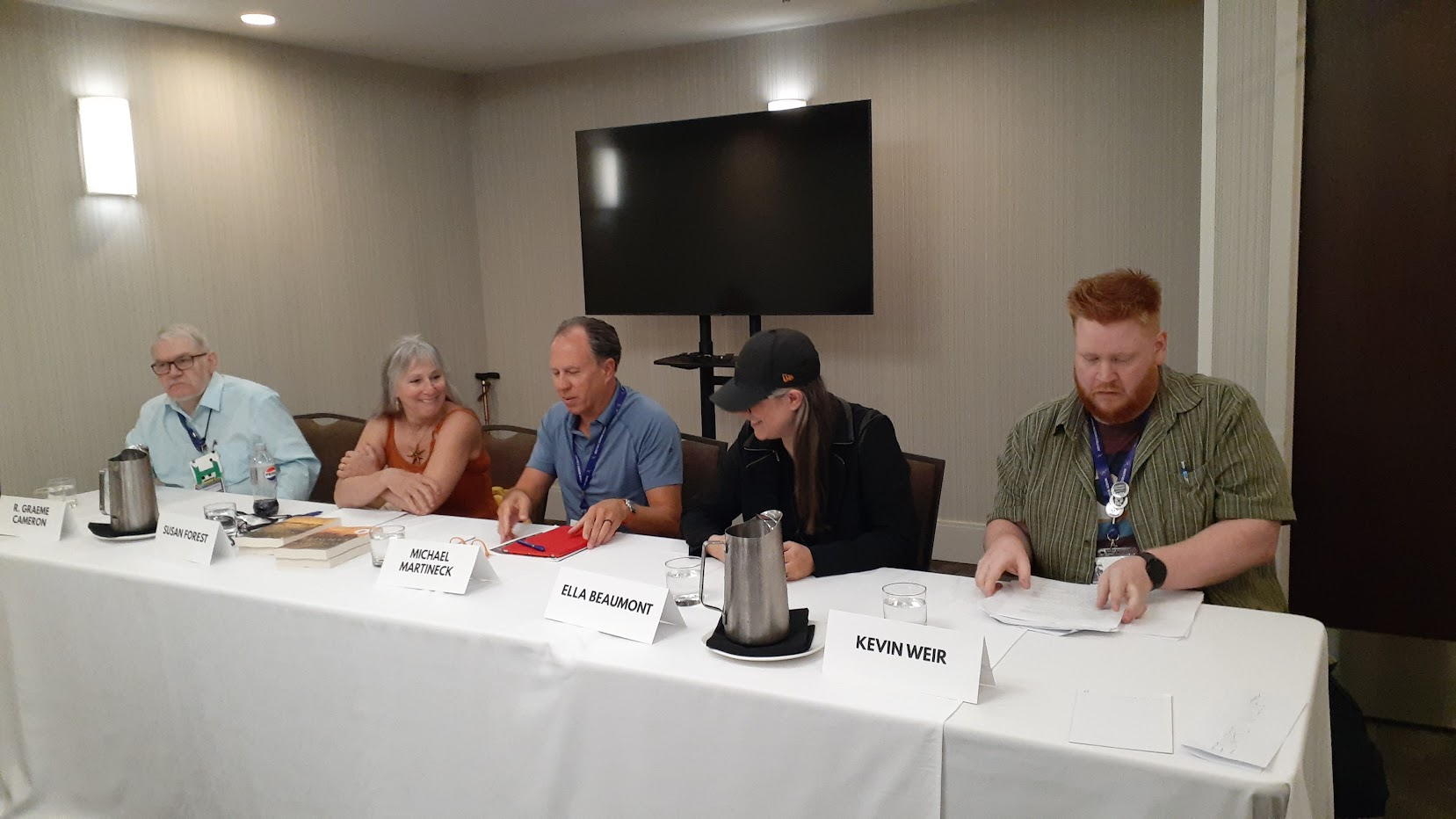
The Slush fiction panel with Left to right: Greame Cameron, Susan Forest, Michael Martinek, Ella Beaumont, Kevin Weir. Thank you!
Know your rights: contracts with Den Valdron
Den Waldron handing out a book to an audience member.
Den is a fantastic author of fun or gritty Sf books, but alse a lawyer, and here, he walks us through the pitfalls of copyright and contracts, those contracts that writers are soooo eager to sign to get published!
I never saw Den pleading in court, but as a presenter, he is lively as he walks around and tells it as it is. His booming voice still echoed in my ears as I write this.
Stop pushing us onto the sidelines!
One of the most useful panels about the presence of “disabled” persons in stories, and how they don’t want to be seen as a sidekick to the abled hero. A lot of good discussion. Left to right: Cait Gordon, Arlene F. Marks, Madona Sakoff, Rick Overwater and Fiona McTaggart.
Too often an author introduces a disabled secondary character into a story, mostly to check the disability box. BUT the treatment shows that often those writers have no idea what it’s like to live the experience. (I plead guilty here at least once, however, in Phoenix Clouds, Blanche is the heroine.)
My favorite panel, We are the heroes, not the sidekicks: Building worlds and stories in SFF that center disabled protagonists, with Cait Gordon, the author of this book, Iris and the Crew tear Through Space, and her colleagues: Arlene Marks, Madona Sakoff, Rick Overwater, Fiona McTaggart. Few people marginalized because of a disability recognize themselves in fiction.
“it’s just as infuriating when the person who looks like us is just a sidekick. Or, we “cure” the person’s disability and there, yahooo, everything is beautiful!” says Cait Gordon.
Or, the hero saves a pitiful disabled person but, oh the lottery winner! that person turns out to be the talented “whizkid” who will save the colony!
I learned a lot, and appreciated this inclusive vision. We need to stop ignoring persons who just have special needs for technical assistance and accommodation. In Cait Gordon’s universe, everything is accessible and no one considers themselves “disabled”.
One person noted: this is similar to the trap that many Paralympic athletes experience: pity or inspiration. Just for that panel and the friends I met there, the trip to Calgary (with the patient husband) was worth it.
Exploring around Calgary
After saying goodbyes to many new author friends, we went on a beautiful promenade at heritage Park.
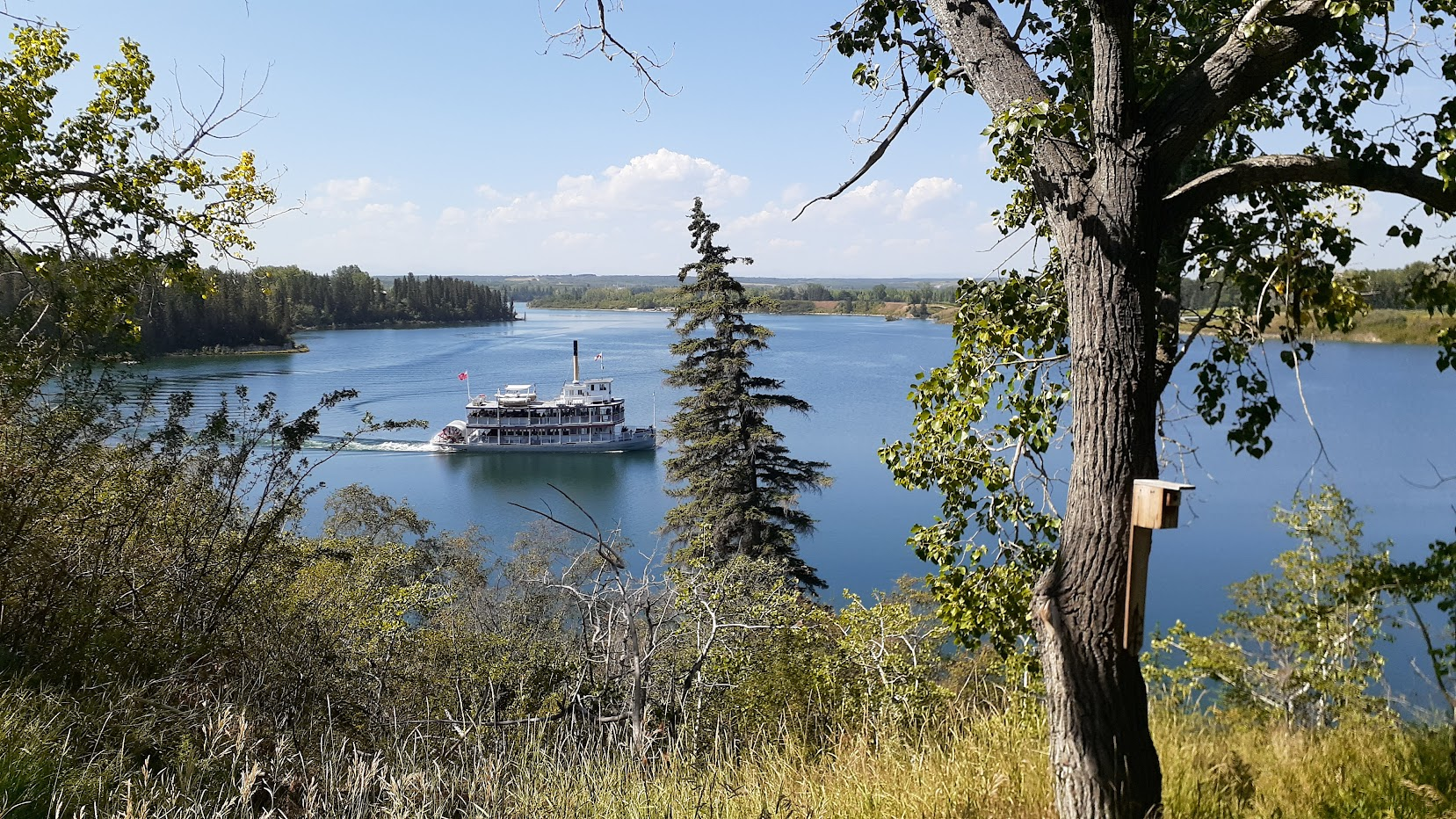
Lake near the Bow River, Heritage Park
After the convention, my husband and I walked in the Heritage Park, passing close the the Owl’s Nest Bookshop that was present at the Convention. The next day, we follwed the trails along the Bow River, to the Calgary downtown.
My author interview is out, published in the Astounding Analog Companion. There, I discuss the premises of my new story, Maragi’s Secret, a novella set in a distant future where humanity has taken to the…. sky. The full story is available in the current May-June 2024 issue of Asimov’s.
There’s some cool factoids for the hard-SF aficionados out there, plus photographs of me learning to fly a glider (taken by my wonderful father at the time). It was a fantastic experience, even if I did not pursue that activity. There, you learn to respect the three ‘Ws’: wing, weather and wind. I had a few bad landings (not shown on the pics) before getting the hang of it (ha-ha).
The world-building was, and still is, challenging. And fun, even if the plot seems to swerve in unexpected directions!
I consulted several sources about living in altitude, health problems, not forgetting the perils of dirigibles, especially in the first part of the XXth century. You would think lifting humans in a floating balloon would be a simple volume-weight equation, but the engineering challenges and the huge size of those mastodons, with the then-available materials, were daunting.
Nowadays, the are start-ups trying to push the concept off the ground (in the literal sense). Beside slow traveling, transporting heavy loads over harsh terrain, if time is not of the essence, can be done.
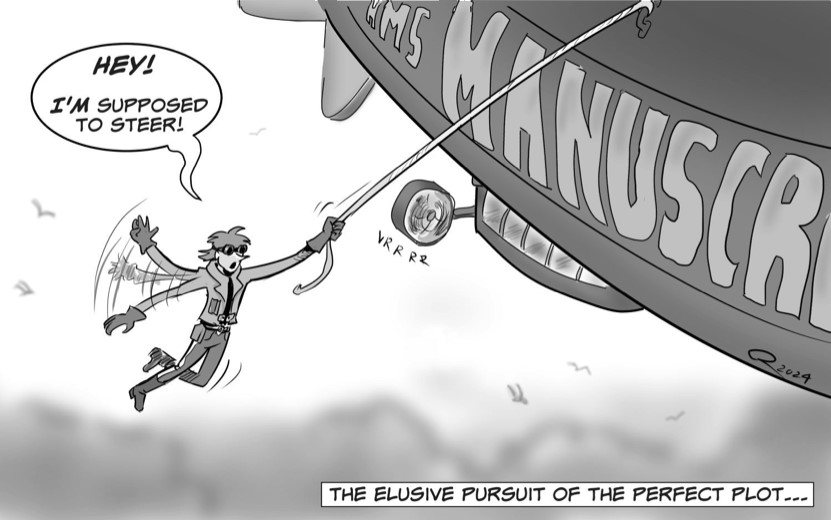
I love to illustrate writing hurdles, so here is one below. That manuscript was a hard act to follow, to say the least.
There may be several stories coming up in this universe, so stay tuned!
Analog Science Fiction & Facts has a blog where the editors interview the authors. This is my Q&A session for the latest story, “Living on the Trap”, published in the Nov-Dec 2023 issue of this SF magazine. And yes, I put on this picture, illustrating the perils of writing hard-SF !
January has been a difficult month this year, since my dear mother Thérèse Lorrain Laframboise passed away on December 29th, leaving her three daughters, three grandsons and six great-grandchildren behind. She was 96, at peace and well surrounded, and we had the joy of benefitting from her advices and moral support for a long time.
On this pic, taken a few years ago, she stood proud and very stylish in her favorite black leather coat. She readily walked without a cane, until a host of health concerns rose their ugly heads in February last year. In and out of hospitals, she kept her amiable character and smile, having worked herself in hospitals (as a dietetician) numerous years ago.
This drawing predate the COP 28, but it mark a sad reminder that this is not the first international conference that bogged down due to a head-on collision between different visions of humanity and the planet.
Money (“the economy”) is more important than people
One vision considers everything as expendable (except their inner circle of privilegied people) and merchandisable at short term. Their long view is to accumulate material riches to weather out the climate breakdown/ social unrest. Because the fossil industry, like the cigarette industry before, knew what was in store as soon as the 70s. So yes, sir, capitalists do care about the future, but only a future where they can lord it over the rest of us.
People (and a livable planet!) are more important than money
The other vision holds the planet and all the living beings on it as important, worth preserving. Humans should work hard to stop pollution now (and also put an end to the multiple conflicts) to ensure a sharable, convivial future in the long term. And of course, the society sprouting up would be very different from today’s rat-race.
Since 2009, I have penned several stories dealing with the destruction of the environment, like Ice Monarch.
Our own actions
So the COP 28 ended with a milked-down version of phasing out fossil fuels. It was expected. Since we cannot count on the incredibly rich overlords to help out of their deep, fiscal-paradise pockets (too busy prepping their luxury bunkers), the brunt of the work falls on us.
As I said in a 2009 conference* at the Anticipation World SF panel, fossil oil is not bad… provided we stop burning it. Leave maybe 1/100 of fuel vehicles for emergencies. There’s a lot of useful things we can do with the fossil oil, (once they clean up their extractive process). Leaving in the Earth is not a bad option either.
We cannot content ourselves with the “small actions add-up” model. We have to do a LOT of work on many fronts (food and clothes and computers and waste management among those). As consumers, we can and will force the backward industries to stop polluting, stop hogging all the government monies to clean up their processes.
The base of the pyramid must move!
It has to come from down up, because those at the top of the pyramid don’t not listen often. Create a helpful environment, change the way we name things to make them accessible. And accept to pay a price, in loss of comfort, less social media, and sometimes, harassment.
At the time of St-Exupéry, WW II was the big concern. Rachel Carson’s Silent Spring would come eighteen years after the valiant writer’s death at his plane’s commands.
But the deceptively simple fable he told in The Little Prince talks about the frailty of beauty, like the rose, that the boy wants to protect. *
Let us protect the fragile things that are important to us.
* There’s also a fun allusion to invasive species… with the baobab story.
————————————–
Michèle Laframboise feeds coffee grounds to her garden plants, runs long distances and writes full-time. Fascinated by sciences and nature since she could walk, she holds advanced degrees in geography and engineering, and draws from her scientific background to create worlds filled with humor, invention and wonder. More on her author website.

















 Echoes of a Sunday artist
