Category Archives: humor

A Special Running Story

Do you love Valentine and running? This one is for you!

by Michèle Laframboise  

That idiot groundhog had gotten it all wrong, Lenny Strong thought as he ran, his Brooks Launch 89 plopping in a slush that was the color of Demerara sugar but less inviting. Each step made a moist sucking sound that would have fitted well in a space monster movie, but that promised misery to his toes farther on the race route.

At least, the cold tampered down the municipal dump’s signature smells of burnt plastic and ash, carried several kilometers over by an ill-meaning wind. He had gotten a whiff of plastic burnt as soon as he had opened the door of his Volkswagen in the parking lot of the arena.

Winter was not, definitely not, retreating, despite what the groundhog had said (not in so many words; reporters did the talking).

Wiarton Willy, the Ontario winter specialist, had gotten half his round body out of his lair, sniffed at the cold Owen Sound air, and retreated before the TV crew could get a good look at the mammal to confirm if it was the same groundhog as last year and, more to the point, if Willy had seen his shadow.

Whatever: this winter was like Lenny’s nephews, endlessly changing their mind about what he should buy his girlfriend. As if a pair of six- and eight-year-old boys knew anything about a right gift for a Valentine Day, a gift that would not scream “Made in China along with ten billion others” when his sweet Alice opened the package.

Maybe it would be the last time he could buy something nice for a girl. He felt by reflex the flat cell stuck in his front pocket, a lifeline or a leash. His current employment was about to stop, not that anyone had told him yet. But there were undercurrents of unease among his colleagues, and he knew the updated management program he was helping set in place would render his task obsolete.

He had deposited his final assessment report this Friday. A hovering cloud of unemployment shadowed his every move and eroded his carefully built self-confidence.

That race, at least, helped him escape the pressure that had been slowly building up in his mind. Running had always been his escape from the worries. His baby sister suspected he was an undiagnosed autistic spectrum adult, because he had been a shy and silent child, then a socially awkward, long-limbed teen. His russet hair and long arms had inspired his classmates to call him orang-outang.

His right sole slid on an icy patch that left no purchase for the clever design of his shoe’s outsole ridges. Lenny stomped his left foot, hard, to regain his balance. He heard the papery sound of water-engorged ice breaking, and suddenly lost three inches of altitude.

A chill enveloped his toes; he saw too late that his left foot had sunk in a muddy puddle of melted snow. Lenny had been thinking too much, not watching how the other tracks had sidestepped this too-smooth patch of trail.

He made an awkward dance to get off the earth-tinted puddle, more papery ice cracking and mud sloshing up his other foot, sending gobs of mud around. He must have looked like a fool. 

Fortunately, there were not many people standing by to cheer up the runners or post funny pics to Instagram. Races held in the cold of February had their advantages.

At least, the lady in her sixties or her seventies plodding behind him had slowed down and circled around the puddle. She had been running a few paces behind him, her short silver hair held in earmuffs, as lime green as her nylon vest. Her apparel was sober and efficient, and he surmised she drank from the liter-and-half bottle tilted at the back of her belt. Her lined face was set in a determined configuration; Lenny guessed she would probably finish in the first tier of her age group.

He hurried forward, his feet sloshing in icy water. Winter races had their disadvantages, too.

#

A sizeable crowd had been packed at the auditorium as the five hundred runners of the Valentine Day Half filed out in a tight pack of pink or red bibs to get close to the START banner. The six-foot high boom boxes had been projecting an orchestral rendition of Chariots of Fire, the kind of movie everyone had heard, because of the score, but that no one had actually watched (to the lasting regret of his sister Merril, who was a movie buff and, yes, had been loosely named after actress Meryl Streep).

The mother of two unruly boys who gave the term ‘perpetual movement’ its sharpest sense, Merril had been swamped in last-minute book-keeping contracts, by clients worrying about the upcoming tax season, unable to attend his feat. And as the “perpetual movement (and noises)” prevented Merril to keep her focus on their spreadsheets, she has nicely asked her brother if he and his girlfriend would be willing to bring the boys out to watch the race.

She had emitted reserves about her big bro running in sub-zero temperatures, but Lenny had the best running apparel his modest salary could get, the latest technology in fabrics and breathable nylon and polar lining from neck to feet.

Wrapping shades transformed his eyes into mirrors, but protected his eyes against UV rays, imprinting the landscape around him in warm hues of yellows and honeys. He was wearing the race’s signature hat, a candy-red knit cap with a white heart over his brow, also made in China with in wonderful polluting polyester.

Well, he wasn’t the one managing the race kits and finisher’s medals, nor seeing to the provenance of the cheap goods in the “looting bags”.

When the horn signaled the start, he had stolen a glance of Alice Windham behind the movable barrier. She was minding the rumbling pair of nephews, in their bright black and gold and red Transformers winter outfits. Her parka was a mud-challenging ivory-cream tone that contrasted sharply with her springing ebony hair and soft brown skin tone.

Alice Wyndham was one of those women who did not need to put layers of foundations and makeup to go out. A grove of stitched Nordic pines on her parka composed a winter landscape that fell naturally on her ample bosom. Even if she wore size sixteen, Alice carried herself with a quiet pride, an aspect that had drawn shy and restless Lenny to her.

Alice ran short to middle-long distances, despite a bulky frame that did not seem to agree with exercise. She ignored the occasional taunt coming from the sides (not from other runners. Long-distance runners knew the training and respected the efforts put into it). Her weight made Alice slower than her age group, but it had never deterred her from taking part in races. That strong will was one thing that Lenny had liked about her.

Today, however, she had taken custody of his racer’s bag with a change of clothes, after helping pin the red half-marathon bib on his left thigh, a place his swaying long arms would not brush off. Many runners had taken this habit, what with the camel-back water reserves, or the ‘munition belt’ of plastic flasks he was currently using. There were four water stations along the way, less than in a summer race, but he preferred to control when to hydrate himself.

There had been too many runners packed tight for him to wave at her. Alice was smiling, her big eyes searching the crowd of colored runners… had she seen him?

#

A stab of pain, like a needle piercing his left talon through the outsole, forced Lenny to slow down. He hobbled to the sidewalk, stretching his left ankle, this and that way.

Ah, but of course, when he felt himself slid, he had put more weight on his left foot. The preventive bandage Alice had wound around his lower leg was holding fast, but the water was seeping up, an icy hand grabbing the ankle he had injured in last fall’s Halloween race.

At least, something unexpected had come out of that accident.

#

His foot slid forward on the soggy leaves, the full weight of his body bearing on it. (Note to self: a Batman hood mask does impair peripheral vision. And soggy autumn leaves in the evening were as treacherous as black ice.)

An excruciating pain had shot up his twisted ankle, annihilating his performance. He had been in fairly good shape and never expected to fall this fast and feel so much, as if some mad man had fired a bullet on his Achilles’ tendon, severing it. His calf was in fire.

Lenny had landed in a sorry heap of dark tights and cape, the false utility belt containing his water flasks opening. He rocked on, hands cupping his knee, his face contorted under the mask, his mind reeling with panic, only conscious of the ball of agony on his foot.

A soft voice over his head drew his attention from his pain to a pair of chocolate-brown eyes that shone with kindness. The woman had been bouncing along in the race, filling an extra-large Cat Woman suit.

She had stopped beside him, gloved hands resting on her knees, to inquire about his ankle; her quiet voice, despite sounding winded, had a warm quality that calmed him. She had asked pointed questions about his ankle, that told him she had some experience as a health worker.

Then she had waited with him for the medic team, throwing her own race time in the basket. As he kept holding his knee up, the pain abated a little, enough to let him appreciate the fluffy cloud of hair erupting from the cap-and mask, and her smile full of bright teeth.

The chance encounter would have stayed a chance encounter, had he not seen the Cat Woman (minus her mask) again at the medical tent where two volunteers in black Tees marked All-Hallow-Race had half-carried him. He found out he hadn’t been to the sole casualty of the slippery road. There was one teary-eyed zombie moaning on a stretcher, his or her wrist twisted, one thin lady with a bad knee, and two who just sat, a cardboard glass of water in hand.

A tall and dark medic with thick-rimmed glasses had given him a tablet of Ibuprofen and, cautiously, unlaced his shoe. When he pulled it, Lenny’s ankle swelled into a ball. It looked so bad he couldn’t help to gasp, which, in a Batman outfit, was not a great idea. At least, he doffed the bat-eared hood.

“Is it bad?” he asked, keeping his voice steady as the deft hands of the medic wrapped a band over his leg.

Lenny had never been injured in a race before. Would he be able to run again?

“Treat it well, and it will heal.”

Then he had raised those thick bottle bottom glasses to the tent entrance.

“Oh, hi Alice! Looking wonderful.”

It was the looking wonderful comment that hit Lenny.

He turned his neck to look… and here she was: the large Catwoman, minus the mask. The latex hood had been pushed behind.

She was of middle height, but her curly hair almost brushed the flap when she dipped under. In the better light, her soft-angled face had the symmetry of a diva, and her curvaceous body suggested generous surprises. Then, his eyes fastened on a lime green and violet medal dangling from her neck, held by a inch wide ribbon.

Of course, she had finished and harvested her finisher’s shiny medal.

“Hey,” she said. “I bet this is a sprain, André?”

Lenny’s reflection bobbed up and down as the medic nodded.

“It’s just a sprained ankle, the soft voice of the medic said. That swelling is normal.”

“It’s no big deal,” Alice said.

She smiled regally.

“You’ll be back in your bat-cave in no time!”

That’s when he noticed the lime-green ribbon in her hand, with a similar medal hanging under.

“For, for me?” he asked, knowing he had not completed the course.

She drew closed to the exam table, and, as if he had been royalty, lowered the ribbon on his shoulders. She smelled of lavender, sweaty nylon, and latex.

“Sure. While you rest the foot, want me to get you some food at the table?”

And that was it.

#

Wary of another mishap, Lenny gradually increased his stride back to his former pace, feeling satisfaction as he passed other runners. He observed their gait, their posture, their ages, or putative ages because the winter layers hid most of the body, even the face. Serious runners tended to get slim, and in winter, it was difficult to spot the difference between men and women, except, of course, for the occasional pastel pinks or lilac.

At this stage of the race, organic resistance and training had separated the runners, putting more space between them like a loose knitting. So he was surprised to see the bird-like woman still going strong.

He did not run with a negative attitude, like some of the younger men, considering all others as rivals. Lenny had fun running, and he told others he was racing against himself first. Was it true? While he was favoring his fragile ankle, he had been passed by the bird-like woman and several participants clearly belonging to the 70+ age group. He had felt a mental pinch as her green silhouette receded, along with the sloshing water in her half-empty bottle.

Alice did not have a single competitive bone in her sporting self.

She had told him once how she never was annoyed when seeing a white-haired, matchstick-limbed woman passing her. On the contrary, Alice felt a cheer echoing in her, a relief to see those elder people having fun and keeping healthy. At the hospital where she worked, she saw too many patients in bed shape.

A gust of chill wind slapped his lower face. The route was curving East, which was a good thing because the afternoon sun would be in his back.

Not that there would be much sun, as clouds piled over the horizon like rainy cushions, tinted violet-gray through his visor. He hoped they held snow in reserve, not rain.

Consistency was not this winter’s middle name. A succession of thaws and refreezing had transformed the sidewalks into danger zones with treacherous black ice and solidified mud. The coming spring would be a morass of storms and frosty mornings that would convince the wild fruits and bushes to wait longer before greening up.

Lenny had expected puddles along this day, and the cold, but not stepping right in the bottom of one. The muddy, icy water did not reach to the ankle, but the flexible mesh of his running shoes was impermeable. Cold water seeped through the mesh, absorbed by his technical socks. The fabric was supposed to keep the cold at bay, but his feet did not agree.

He wriggled his toes. If the pricey socks worked, he should be able to finish the nine or so kilometers of this race. He just had to let his natural muscle heat warm the fabric.

A good pair of warm socks, he thought.

That would be the ticket to Alice’s heart, better than some heart-shaped box of chocolates. Or some candies wrapped in unrecyclable plastic.

Yes, Lenny thought, as he heeded the signals of the volunteers in red sleeveless vests, and as the marker for km 8 passed by his side.

After the race, he would shower and hit the stores. Exercise socks were the bread and butter of most sport shops, their price range low compared to the technical vests and pants, but the profit margin high. He would get Alice a thick pair of socks with cushioned soles that would accompany her in her shifts.

The pain in his sole had morphed into a dull ache. Maybe the cold water helped to tone down the feeling. But Lenny was a runner and used to demanding conditions.

Running had been a lifeline for him at school. Even after leaving school and the bullies, running had been a solace that carried his job worries away.

He would endure the pain like he had endured a string of abusive bosses. Some half-marathons were more demanding that others. Lenny knew that he was today in better shape than most of his former bullies. That simple fact gave him an immense gratification.

He checked the Garmin GPS watch at his wrist, pulling down the edge of the sleeve.

He winced. Of course, he had lost some precious minutes dealing with the aftermath of the puddle. If this kept on, Lenny would finish in the last third of his age group. He was still happy for the other runners but, deep inside him, there lay a kernel of pride.

Contrary to Alice’s let go attitude, Lenny felt that he should cross the finish line before, say, the venerable 80-year-old gramps in startling sky blue outfit with the matching sneakers that had just scissored past him. The sneakers soles were almost flat, like basketball shoes, so each step noisily smacked the ground.

He checked himself.

Heart, pounding, okay. Breath, not too hurried, but his throat was itching. He pulled the flask at his ‘munition’ belt and sipped a few drops. He could stop later at the table for an energy drink.  

In the next two kilometers, Lenny managed to regain his stride. He passed several runners that were searching for their second breath. After seven years of steady running, he had learned to recognize the obvious beginners. Their clothes often gave them off: ill-fitted pants, too many layers, a ungainly scarf. Or they wore a heavy parka without layers, which would make the person freeze in his or her sweat.

Even with the nec plus ultra apparel, the body position betrayed the inexperienced. He passed a red-haired teen in glossy silver suit who ran with his shoulders hunched and head bowed, neck strained as if he wanted to see farther up the road. The head averaged fifteen pounds, which made a painful torque when held off-centre.

Hello, neck and back pain, Lenny thought. The teen’s spine would curve more, take too much effort. The young man had gradually dropped his pace, so that even the sky-blue grandfather had passed him.

The start of a race was always exhilarating, when everyone was in good cheer and the body seems to have an endless reserve of energy. But Lenny was now at a point where only regularity would keep him safe. No mad dash forward.

He had stopped enjoying the décor. He barely glanced at the nicely packed two- and three-story brick houses, the apartments balconies filled with plastic chairs and tables waiting for summer. There was a drag in the winter races, because those balconies would have been populated with cheering people in summer, and the sidewalks and front lawns would also be occupied, older parents reclining in lawn chairs, children bouncing around holding carboards with written encouragement for a family member in the race.

An intersection was coming up, attended by the fresh-faced police students in black vests directing traffic. After this turn, the race route would plunge in the downtown, then a wide waterfront park, and finish in the arena where friends and family waited.

Lenny hoped Alice would still be waiting with the nephews. She had a lot to do, and if the departure hour was clear, she knew he would take a couple of hours to complete the race. He would love to go under two hours, but his ankle would make it difficult.

The arena had put up a children’s pen with inflatable structures to help the waiting, but she might have to drive back and drop the kids for lunch at Merril’s place.

Whatever the case, Lenny never stayed for the announcements of the categories’ winners. He would consult his race time on his phone, while combing the shops this afternoon. And the prizes’ draws were still mostly unsustainable plastic gadgets that would end up in the landfill or somewhere in a waste-covered coast in Africa.

And it warmed his heart that Alice appreciated his concern.

As he neared the intersection, his breath had become labored. He felt the moist air scraping against the lining of his lungs.

At least, the menacing violet-gray clouds had fled, and the sun had dried the road ahead. His toes were still bathing in sluggish fabric of the socks, but the movement had warmed them. The route was clear, patted by many feet before him, without black ice or invisible puddle.

Lenny could risk ramping up his speed without risking an humiliating fall.

It had been such a long time since he won anything… So many guys and gals in his age group took up running, that getting even a third spot in the “masters” category had become impossible. And, as for qualifying for the Boston Marathon, that dream had taken flight as son as he had seen the qualifying times. He would have to be 80 years old with his current time to take the trip to Boston.

And those qual times were dropping, year after year, because more people took to running. It should have been good news, like for Alice: more people acting for their health, doing sports.

#

He had been in his twenties the last time he had won a prize. And he craved the gratification like, years ago, he had craved respect.

Respect he didn’t get. He remembered the slurs, freak show, orang-outang, he got when his autistic condition had become known. High-school had nothing on the seventh circle of hell for a shy, awkward bird-loving computer geek.

Except, maybe, for tubby girls like Alice, in a period when stick super-models were considered the quintessential women.

They did not hail from the same town, he from Orangeville and she from North York, so he had never known Alice as a teenager. He admired the adult she had grown into, though. When his colleagues had dropped passive-aggressive commentaries about his girlfriend’s weight, he had just smiled, thinking, their loss.

A blast of powerful truck engine revving pulled him from his dismal thoughts. A strong smell of Diesel exhaust blew past him.

The road had been separated to allow some circulation, and a eighteen-wheeler was idling on the opposite lane, its long box stamped with a desk-sized tub of vanilla ice cream. All drivers in that lane had to wait until their loose cloud of runners completed the turn, before the pony-tailed blond police student allowed them to go on.

The truck’s raised exhaust vent sent a dark plume behind, meaning, in front of him. But no, the truck’s hot exhaust rose higher.

As he completed his own turn, Lenny noticed the line of cars behind, a round-edged Toyota, a whiter that white mid-sized Subaru, a Ford-150 with three rusted doorless fridges chained on its platform, a Hummer H3 SUVs with enormous wheels that would have been called for in the rocky mountainous trails, but not on the well-maintained streets of the city. At least, the Ford had somewhere to go.  

The SUV driver lowered his window, ignoring the cold. Lenny heard him spout a searing sucker! at the blue gramps, who, probably used to insults or listening to the music streaming by his earbuds, smacked the asphalt on his way.

As Lenny passed the SUV, he couldn’t help glancing at the open window. It had been his reflex, to check for any danger at school. The face he saw was the omnipresent kind of entitled white guy, spots of anger coloring his cheeks at the obstruction. Wherever he was going on a Sunday, it certainly wasn’t Church service. He cast a very un-Church-like curse, followed by words that Lenny had heard often enough.

Health nuts!

Another voice piped up on Lenny’s right.

“Hey, running’s not a sin, ya know!”

Lenny beheld the bird-like woman he had barely passed while cranking up his speed. He sent her a grateful smile. If only he wasn’t so shy!

“Well, let them try to do twenty-one kilometers, for starters!” she said, in the chirping tone of one who had seen and heard a lot.

The column of cars was ambling away now, the runners in the back of their group having turned, and it was an art for the young policemen and women to judge when to let the cars pass, while not imposing an undue delay to the upcoming runners.

He cast a glance over his shoulder. Four or five runners were waiting, clearly older, arms thin as matchsticks, or out of shape.

Two elderly ladies in matching red windbreakers and scandal-pink leggings who had elected to walk to the intersection. They did not look stressed out or annoyed at the waiting and he envied them. One leaned to whisper something in her companion’s ear, whose face creased into a half-foot wide smile. The ladies, either friends or more (it had long stopped being a sin in most people’s eyes), looked satisfied.

Lenny, himself, was he satisfied as his days as a programmer were counted?

His phone pinged as he passed the km 10 marker.

Alice knew not to call him in race, but his sister did not have the same reserves. He unzipped his front pocket and pulled the flat cell. He recognized the number. Not Merril. His overhead manager’s phone. Couldn’t they leave him have his Sundays off?

It was a text, short and to the point.

Lenny, we’re sorry. We’re pulling the plug on your project.

He felt his muscles cramp, and his gait wobbled. He had expected this outcome. He had fully expected to be given his pink slip next week.

And after?

Programmers were an ever-renewable resource, like water or sun electricity. He had to kept current or die, like the publish or die of the science researchers, and it had been more than five years than he was toiling at this monster code. He had become obsolete, like a 1978 golden-flanked fridge.

How could he think of learning a new language, that would offer no guarantee of employment? IT technologies were fickle things, and the best were not always the winners, as the Beta and VHS struggle had demonstrated. History was replete with those treacheries, with business gurus sprouting up overnight selling the fool-proof, flawless new thing, collecting students and their money, before disappearing.

And he was too old now to compete with the bright young brains of either sex sprouting from the specialty colleges, their fingers dripping with code. Savage coders, one boss had dubbed them, like colts eager to spring into action.

Alice was a nurse, and had worked diligently in the pandemic years, cutting off her training. What could he offer to her? Once out of a job, he would have to leave his apartment. In this new economy, it could take months, years before he could climb back the ladder of, if not success, at least a stable position of moderate prosperity. Lenny wished they could live together, but he balked at being a weight for her.

The Lakeshore drive alternatively wound its way between rows of restaurants and boutiques, never far from the rocky shore.

The street, in summer, thronged with tourists come for festivals, or for an unimpeded view of Lake Ontario. In the deep mid-February, few people dared to wait outside, and only the gaudy hearts banners strung over the streetlights by the city were left to encourage the runners.

When the path ran close to the ice-covered Lake Ontario, the fierce winds buffeted Lenny, carrying whispers to his covered ears. The ice floes were pushing against the shore, with dark water between them, a sign of the degenerate climate crisis.

Lenny felt the sting of being a dead weight, his future closing. For a moment, as he sloshed by on his icy feet, he had this idea of letting himself pitch sideways, and fall in the cracks between the icefloes, where he would not be a dead weight anymore, just a dead body.

#

He was barely aware of having slowed down, again, but through the blur, he spotted the bright blue eyes of the bird-like lady passing him (again).

“Hey, are you OK?” she said, her voice even, not winded.

Lenny became aware of the cold runnels on his cheeks. He lifted his nylon gloves to brush at his cheeks, ashamed.

He had been crying, crying over his life, his lack of future. Thinking about killing himself, for Peta’s sake!

“S, sorry,” he said.

A stupid response.

“Don’t be,” she said. “There will be other races. My first marathon was a total disaster, and I was younger and way more fit than today.”

 He felt the sting, again, but he covered it.

“I just… lost my job.”

He blinked, because more tears were accumulating like a line of candidates for employment.

A flash of blue eyes, then.

“Keep left!” she said.

He sidestepped a glossy patch of asphalt on the trail that would have been the end of his poor ankle. The bird lady had been looking where she was going. He had just been sorry for himself.

“T-thanks,” he said, through his teeth.

She harrumphed.

“Lost tons of jobs, too. Don’t fret too much, just keep going. It will even out at the end.”

Then, she picked up speed, and he mulled over her words as he looked at the sole of her gel-padded Saucony shoes.

#

He remembered the old books, the 70s and 80s Hollywood movies Merril talked about, where women actresses were considered old past their early forties. Unless they kept in shape or used cosmetic surgery. He remembered as a teen, how he found that many movie female stars had the same face and lips and cheekbones, only the hair and tone differing, while the guys came in an unending diversity.

In his great-grandma’s time, this dynamic woman would have been relegated to a rocking chair, her feet constricted inside hard black shoes. His grandmother had been scorned by neighbors because she kept gardening well into her 80s. His mother had worked, then been laid off, then endured a string of ill-paying jobs, a descending social mobility until her retirement.

As the thin green silhouette veered out of the municipal park to the tourist part of the lakeshore, Lenny felt a new, gentle pride swelling inside him.

Not for him.

For her, this unnamed granny.

And that’s when Lenny Strong truly, understood how his dear Alice felt. His sorrow ripped apart like a plastic bag left too long in the wild.

His feet were still hurting, but he took it in stride. He stretched his arms, high over his head, as if he just came off his bed. He did not look at the white markers on the side of the road.

He even cast a grateful smile at the young police students directing the circulation. They would soon lead a professional life filled with the worst that human nature could offer (and few satisfactions, considering how the legal system worked). So how expensive was it to offer them a smile, even if he resented getting a contravention?

He and stopped looking at his Garmin. He would let his body decide and walk if he needed to walk. He would not put undue pressure on his left ankle.

For the rest of the race, Lenny floated on his new insight, welcoming each runner who passed him, not gloating inside if he ran past a tired teen cursing his bad luck. He didn’t see the green bird woman again, but he gave a toothy smile to the volunteers giving water at the turning point back toward the arena.

Launching a heartfelt thanks to the freezing volunteers waiting for the last runners to enter the arena.

And, yes, yes!

Somehow, Lenny had made it: the finish banner getting close and closer, the race MC calling out his name over the speakers, and the crowd cheering him, was it the green granny there, with those young men clapping her bony shoulders? Cheering, even if he was in the last tier of his age group.

And there, past the banner.

He had forgotten to glance at the electronic counter panel, so surprised he was to be already finished.

Lenny was flushed with an incredible bliss as he ran toward the volunteers. And then, the most beautiful woman in the world was suddenly there, a pair of nephews bouncing behind her, holding in her hands the red and pink heart-shaped medal.

Alice!

As the silky ribbon fell softly on his shoulders, like a knight, Lenny knew he would live the best Valentine Day ever.

THE END

heart in metal

Fun at the Signing Table: It’s Tax Season again!

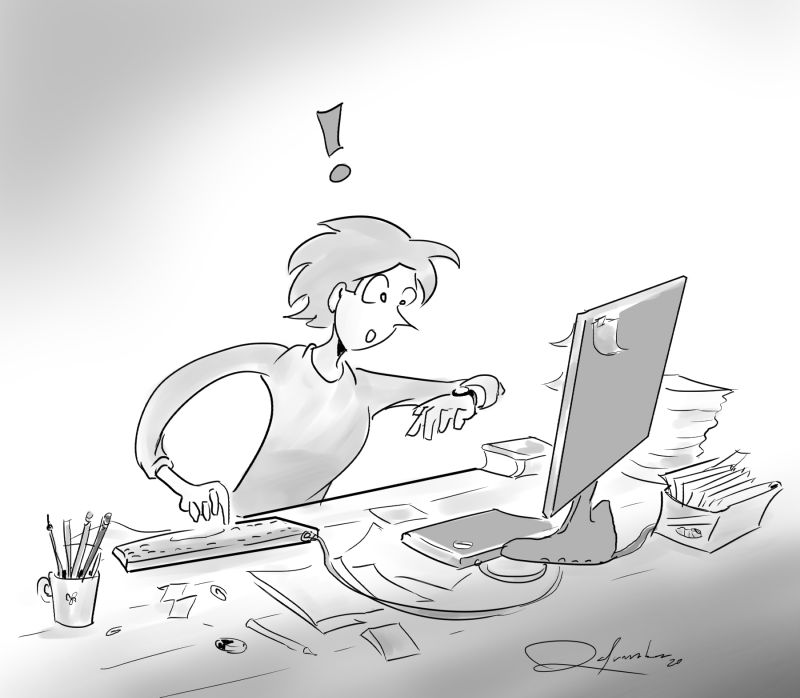
Writers and artists have a lot to do to complete their tax return, as self-employed workers. So if you finished, have a cheery laugh at this page showing my plight. You may see by the year that it is not from yesterday… with all the paper forms. The webcomic was originally published in French, so I translated it fast to get it to you!

(For the non-Canadians, RRSP is a bit like a 401-k account)

Coming Up Soon!

After a busy summer counting birds and writing, I come back with the first English graphic novel for a long time!

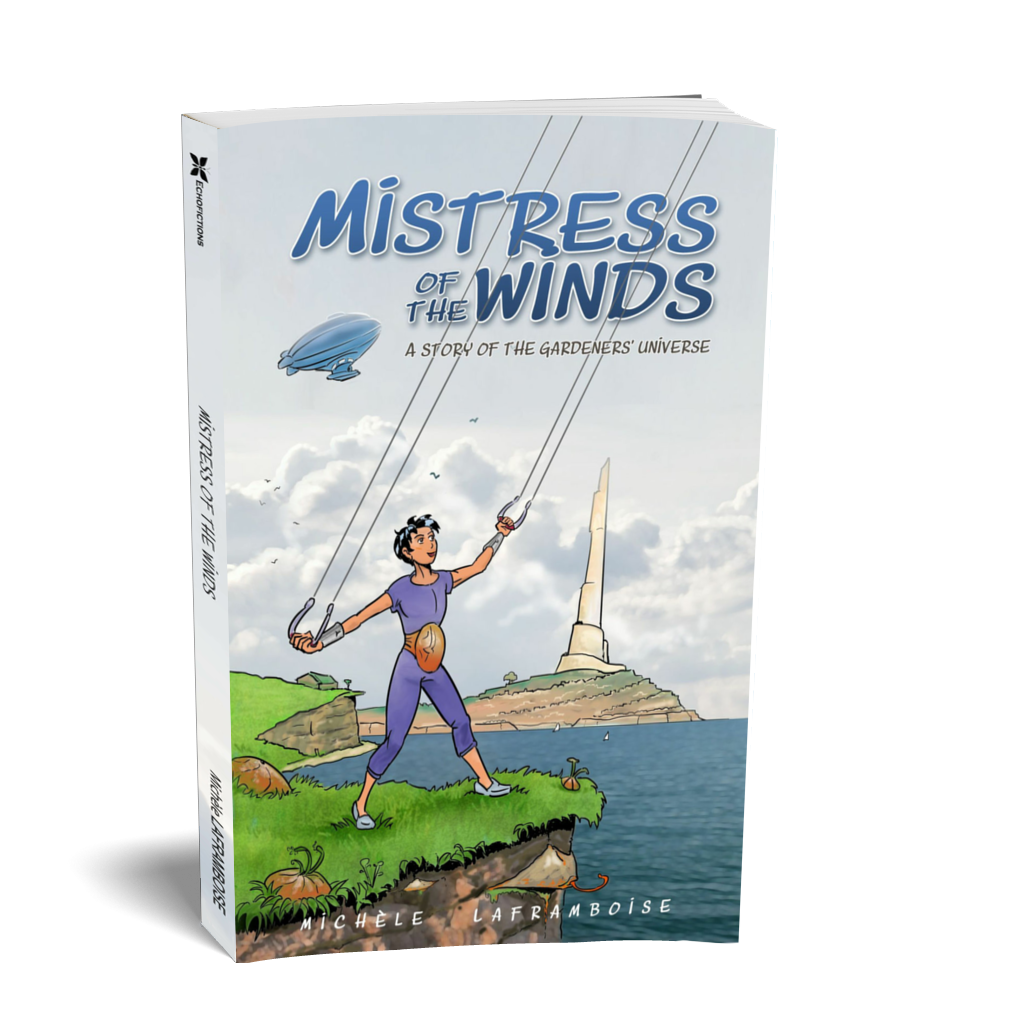
On the leafy planet Luurdu, young Adalou dreams of becoming a wind mistress. Alas, she faces a thorny competition because the kite choregraphy brings a high prestige to women who excel in this art. Adalou must overcome her family’s opposition, her biological limits and the jealousy of high-class rivals to conquer her place in the sun.

A graphic novel set in the universe of the space-faring Gardeners, sprouting from the fertile imagination of Michèle Laframboise.

My fresh new YA graphic novel, Mistress of the Winds, set in my Gardeners’ universe, will be out an about in September. 92 pages, B&W art. The pre-order link is here.

An extract here.

I’ll Be Moon for Christmas

My Holiday-themed story, “I’ll Be Moon for Christmas” will be featured in Asimov’s end-of-year issue. With fine cover neighbors like Kris Kathryn Rusch and Ray Nayler! I devored their previous stories, which doesn’t mean I won’t discover the new (to me!) voices in this upcoming issue.

This will be my fourth publication in Asimov’s, laying to rest the idea of a fluke when the magazine accepted my first story. It is also my first Holiday SF tale and. by the title, you may guess what immortal song is playing in my mind!

Meanwhile…

On the Canadian front, I will have two stories coming up in Polar Borealis 25 and 27, edited by Greame Cameron. On the French front, there will be a hard-SF story coming up in the French SF magazine Géante Rouge at some point in 2022 or 2023.

Meanwhile, I tend to lag behind in the reading department… I should finish my current SF mags OnSpec, Analog & and Asimov’s !

Diving into the Writing : Concentration levels

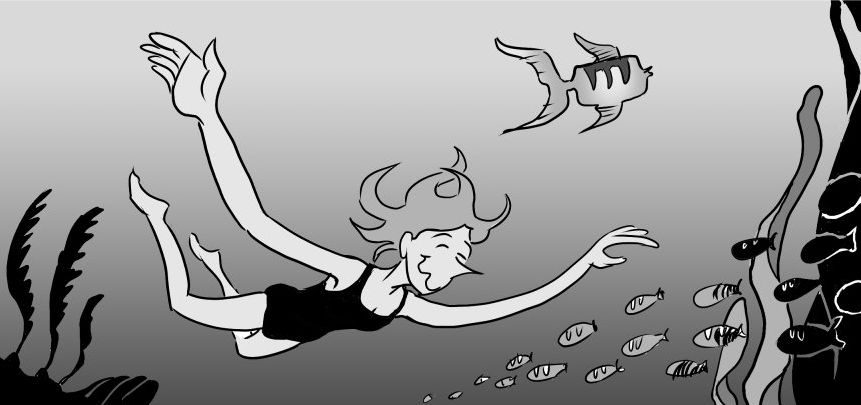
Some details missing like the scuba and palms, but you get how I feel when writing… or reading a good book!

Those who enjoy scuba diving (or who, like me as a kid, had watched Commander Cousteau’s documentaries) know that before going back to the surface, you have to make mandatory decompression stops to allow the molecules of nitrogen/ helium who had taken refuge in your tissus under high pressure to leave your body, via your exhaled air.

Otherwise, the nitrogen can decide to turn back into gas while it is still lodged in your veins and your cells, and it would not be a pretty sight. Decompression sickness is as dangerous as its opposite, the deep nitrogen narcosis which develops sneakily if you spend a too long time at 100 feet deep.

Diving in deep water

For me, writing feels like diving into deep water.

Except that my decompression breaks are in the opposite direction! It takes me a long time to reach the level of concentration deep enought to penetrate a story. Levels of ‘compression’ or concentration…

My first level takes about 45 minutes to an hour. I go over what I wrote the day before to get the story and its atmosphere back inside my head; I check notions, places, etc. If I write 100 words in that period, that’s normal.

At the second level, which takes me about an hour to reach, I am entering the story at 300-400 words per hour.

At the third level, everything becomes magical: my fingers hug the keyboard and the ideas are transmuted into words without my having to stop. I feel like the story is writing itself, and I’m approaching 600-800 words an hour.

If I keep this on without interruption, I reach my fourth level of concentration: the story tumbles like an avalanche in my head, fingers and words roll like marbles on a flat table. It is paradise. I smash through the 1000 words per hour wall. Often, this happens in the evening, when I have a deadline approaching.

BUT… I do not descend to this 4th level often.

Ah, if only my concentration levels were simple steps! (Photo by Francesco Ungaro on Pexels.com)

Interruptions!

On the other hand, to go up to the surface, there is no need for decompression stops. Any distraction can yank me up in a jiffy. The phone, someone calling me, or the family member.

As soon as my enthusiastic husband comes to tell me about a techno gadget he saw on the Internet or heard about on the radio, poof! immediate surfacing.

If the conversation is less than a minute or two, and if I don’t have to think to answer any complex questions, I can dive back in and get through my ‘focus’ levels pretty quickly.

Alas, this is rarely the case.

Another condition favors my rapid return to the depths: the certainty that I will NOT be disturbed again in the next few minutes!

So, after 5 or 10 minutes that ate my concentration. And, when the interruption ends, I have to dive back in and redo my stops. And, often, barely submerged, of course, it’s already supper time…

Confession of an unfocused writer

I created this article from a recent writing mishap.

Here I was, happily tapping on a wonderful science fiction story set in Antarctica, pom-pom-pom… when all of a sudden, a flawed scientific detail jumps out at me. Have I correctly calculated the position of the sun below the horizon during the southern polar night? Have I checked the right calendar for the current polar night?

Rising to the surface, opening the Internet, checking the info, then letting yourself drift on the Wikipedia sites, drift farther on the Scott-Amundsen station site, watching the web cam (it’s cold here, but not as cold as in the South Pole)… And, I came to my senses with the crucial realization of having wasted my time. It internally annoys me.

On the heels of that realization came another torment: should I change an explanatory paragraph to place it closer to the opening of the short-story? My words are so tightly knit together that moving one paragraph or one word requires rewriting several others, before and after. And so, I paddled on the surface to juggle these paragraphs.

Finally, after trying to dive back, I decided to go for a walk outside to clear my mind, and come back at another time. I told myself that it’s still warmer here (in Canada, Ontario) than at the South Pole…

TL;DR: Writing is like diving, but with the “concentration” stops going down instead of up.


Michèle Laframboise is a Canadian SF writer, with more than 60 stories published. Her most recent story, October’s Feast, is available in the Asimov’s SF Magazine. She is a fair low-level athlete runner, a lousy gardener, and avid birder. More on her official website here.

A Short Winter Tale for a Short Day

Special Delivery

Clang!

I was picking at the stubborn ice in the garage entrance. Again.

Clang! Clang!

My shovel made such a racket that I was certain the whole neighborhood had heard. At least, those neighbors who didn’t go out for work, which was, a lot of ’em this peculiar, cursed year. The current temperature danced around a balmy zero Celsius, but the wind had frozen everything hard. 

If, at least, the Sun had spared some if its heat for the fissured blacktop of the entrance, the ice would have melted by itself. Alas, a bunch of gray clouds had been squatting the whole sky all day.

I hated it when winter couldn’t decide, once and for all, between staying over or under the freezing temperatures. One day, snow to our knees, the following day, it all melted into slush puddles; then the following night created uneven ice patches everywhere. Add the sidewalks to that equation, their broken slabs a danger for any walkers, hidden under the layer of pristine snow, and that’s southern Lake Ontario for you.

As my nice neighbors’ car entrance was a slippery incline, the risk of a bad concussion was multiplied tenfold. Hence me, hacking the ice like a mad woman, the metal reverberations grating my ears, the vibration stunning my wrists even if I wore padded mittens.

For now, the wind factor was chilling the sweat channel pouring over my spinal column. Swerving around the buildings, the wind surged from every direction, surprising me. I should have covered myself better than a sweater and padded vest, but too many layers only made me sweat more.

If only the darn winter could make up its mind! That dance around the zero was driving me nuts, besides wearing down the asphalt. And my patience…

At this hour, I should be cooking the no meat turkey, mashing the potatoes, finishing the chocolate cake that would only be a pale reflection of the one my grandmother made. And I had to set the table to greet the husband and son coming back from their own errands. And choose the best plates, those perched on the high-altitude cupboard shelf.

But the thought of my neighbor, not much older than I was but with her hip broken in a bad fall, prodded me on. Her husband’s sore back and weak heart prohibited him from any undue exertion, like shoveling dense snow. I was in good shape, relatively speaking, of course, so I toiled for them.

Of course, it was stupid of me to risk a heart attack to de-ice a car entrance.

***

Evening fell too fast, giving birth to a colored rivalry of Christmas lights, enhanced by technical prowess. I felt a pinch of envy regarding this prodigality, but those lights offered a gift of beauty to any passerby.

The world was so dark, so hard. Those constellations of blue, green and white lamps warmed up my soul. I paused, the echo of my last shovel hack sounding for long seconds. A fragile bubble of silence expended over the deserted street.

My breath created soft clouds of condensation that dissipated too fast.

The silence, in a city, was something to cherish. I listened for the chatter of chickadees, the angry twip of a house sparrow, the tiny crack of the hardened snow under the paws of a cat, or the light bounces of a scurrying rabbit.

But the only sound I heard was the dry crinkle of an envelope under my boot. Untouched, unopened, escaped from the recycling van with the complicity of the wind. On its face, printed Christmas ornaments and holly leaves, framing a too familiar message: give generously!

In my humble opinion, printing Give generously! or urgent!!! We need you! with an excess of exclamation points, constituted a strategical error. Most of those envelopes landed directly in the recycling basket.

I didn’t want to cast the first rock at my neighbors. But since charity organizations had taken to systematically share our address lists, it was twenty, thirty Give generously envelopes that fell in my mailbox, just because I, once, forgot to tick the microscopic square hidden in a small fonts paragraph.

This accrued pressure had caused a mild case of giving fatigue.

My thoughts turned darker. Yes, give generously, while tycoons and bankers fired men and women or conspired to shrink their worker’s rents, inflating their own wealth!

And those same ultra-rich would put one hand over their heart at charity galas, while the other slipped gifts in politicians’ pockets, garnered further tax breaks with legal tricks, accruing the burden for all others. (And then the politicians opened their hands and told the populace, “See, we do not have money…”)

Strangled by all those speculators, what would be left of this famous middle class that shrank and shrank? Donations dropped year after year, even with the added promise of an anonymous donator doubling or tripling the given amount. So many of us toiled at two or three jobs to make ends meet, conscious to be at one illness, one accident, one job loss from homelessness…

Clanggg! I hit the blue-brown ice with a vindictive zeal.

The shovel broke a layer of ice that would have felled my fragile neighbors. Smashing the ice was as difficult as weeding the garden. In summer, I struggled to unearth the deep roots of invading plants instead of just pulling the heads off. Battling the roots of corruption was as difficult; many politicians pulling off some scapegoat from their hat and going on as before.

Under the thin ice, another envelope winked at me. All red, with the same holly leaves and Christmas tree ornaments, but bearing a different message. Flash sale, Find your gifts here, 50% on everything

The other face of the holidays, where stores and banks and insurance agents offered pre-approved credit cards with incredible rates… Those two injunctions fought for my mind space.

Buy, buy, buy!

Give, give, give!

Buy or give, but never disturb the generous speculators who congratulated themselves with champagne at Davos while pouring crocodile tears over the climatic crisis brought by their own profitable actions.

So be it.

***

This year, I had decided to forego the shopping and give all that I could: clothes, food, kitchen items, books to nourish the dreams…

A low drone rose.

I thought it was the car of a neighbor returning from a job that might evaporate next year, in another reorganization. Then I heard distant bells tingling under the loud clangs of my shovel. Under the tingling bells, a chorus of voices sang, soft like the abating wind. Were there still people singing carols?

For a moment, magic bathed my soul.

Then a familiar rumble of a diesel engine cut through the magical moment. 

The beams of two spotlights swept the sidewalk that I was furiously hacking. I turned around, sweating and out of breath, my palms aching from the shocks, intent on spilling out my consumer/donator frustrations.

The chorus I had heard a moment before was flowing from the driver window of a huge eighteen-wheeler, pulling a semi-trailer. The trailer’s side was marked with an unfamiliar logo with holly leaves and one round tree ornament. Such a mastodon should never have been able to engage in our narrow, curved residential street! Neither should have it been able to ground to a halt without a loud hiss of brakes.

A ginger cookies scent titillated my nose, along with a waft of warm air from the open window. The left elbow of the driver jutted out, wrapped in candy-red, shiny coat.

A bearded face leaned out of the window, the lower edge encrusted with ice crystals that fell as his arm brushed over them. The soft singing was still pouring out, probably from a high-quality radio system, because the voices were so clean it sounded like an entire choir had been squeezed inside the truck’s cabin.

“Excuse me,” the driver said, “I’m kind of lost.”                      

His gravelly voice betrayed an age in the advanced seventies, confirmed by the beard, whitened by worries.

Another elder who had lost his pension and had been forced to work as long as he had some strength remaining.

No, it was his way that he had lost. And, as like most truckers, he was ‘on the clock’. I put my bad mood in my pocket, with the envelopes, and planted the shovel like a flag into a precarious snowbank.

“Where are you going?” I asked, my voice raspy with the cold.

The driver turned to cut his engines, gaining my silent approval. The rumble of diesel died out like an organ endnote. He scratched his head under the rim of his knitted cap. Red like the anorak.

“Well,” he said, “it’s a bit complicated, since my GPS has retired…”

“Retired? He’s luckier than I am!”

Oops! I had talked without thinking. The paper tip of my bad mood’s viper tongue peeked from my pocket.

“Sorry,” I said. “I’m a little like you, a freelance artist living day-to-day, so there’s no retirement package for me.”

“Oh,” he said.

He smiled, and that changed his physiognomy.

I mean, the guy didn’t have that perfect Colgate smile, whiter than white, over gums redder than his anorak. His teeth showed some wear and tear, toned to a soft ivory taint like an elephant’s defense. However, there was a light in his smile that rose to his eyes, their irises the pale blue of the ice, when free of impurities.

And this warmth, this light, evaporated the worries in my head, the magnates of this world receding into nothingness. I didn’t feel the cold sweat channel in my back, either.

It was at this moment that I noticed he had addressed me in my native French, despite my living in an overly English neighborhood in the Toronto area. How could he have guessed my proud Franco Ontarian culture?

“What brand is your GPS?” I asked. “A Garmin, a Tom-Tom?”

“It’s a Rudolph-2.”

“I’m not familiar with that brand.”

“Well, the first was the best, but since he retired…”

 He had spoken on such a good-natured way that I almost didn’t notice the incongruity of a GPS going into retirement. I thought that poor trucker must have been so lonely on the long roads, that he spoke to his equipment. So, I asked him a good-natured question.

“And what are you transporting?”

His arm wove toward the back of the truck.

“Gifts,” he said.

As the single syllable left his fleshy lips, a warm scent of chocolate cake tickled my nose. I felt myself shrinking into a smaller me, transported in a familiar kitchen, as my grandmother was pulling from the oven a magnificent cake. Her mittened hands deposited the dessert on a pad on the countertop. Then she would spread her special cacao icing, a glory as each bite melted in the mouth, and place a little maraschino cherry at the center.

How I missed my grandmother!

I came back to the present with a start. If the bearded trucker carried food…

“Nothing perishable, I hope?”

“Oh, don’t worry, it will keep. I’m delivering everything this night.”

***

In certain stories or movies, there are moments when snotty critics qualified a character as genre blind.

For instance, you watch a movie with a bunch of teens in a haunted house, and the leader brilliantly decides, “let’s split up to cover more ground.” Of course, that was a staple of countless horror movies, like the young woman stuck in a mansion as Victorian as empty, who hears a noise coming from the cellar and goes down there to investigate the source, alone with her skimpy night robe…

That kind of genre-blind, of cognitive dissonance, was on me now. My brain had not connected all the dots yet, still rattled by the solicitation envelopes in my pocket.

So, I addressed the bearded man, hedging my bets.

“So, you’re a kind of Santa Claus,” I said.

I added my best ivory-toothed smile, the fruit of my privileged access to dental care.

At that moment, a concert of tweets and chirps rose in my back. Turning, I discovered a whole gallery of birds, the dream of any ornithologist doing the Christmas bird count.

Cardinals redder than red, with their more discrete dames, their plumage a beige and soft red. Cheerful black-headed chickadees, Black-eyed Juncos, with their best gray and white tuxedos, blue jays harping, and others that my eye couldn’t identify. Among them, a lone peregrine falcon perched on a branch, surprisingly indifferent to all those little meals chirping under its claws.

I was afraid that the truck would dematerialize like in the tales when I turned back.

But no, the driver was still there, one hand on the wheel, his kind eyes contemplating the bird assembly. Maybe I was mistaken, and it was St-Francis of Assisi hiding under this beard.

Really, I would be fine with that.

“Yes,” he admitted. “And I must deliver at a series of addresses.”

He foraged on the passenger seat and grabbed a pack of old matrix print paper. There must have been a hundred pages, all perforated on the sides. I glanced at the top address.

Not mine.

I felt a weird let down feeling. Then, I shook it off like snow from my boots. What was I griping for? Living in a fair neighborhood, in a country at peace?

A light bulb flickered in my mind: the first line was the address of a distribution center of food and clothes in my city. Because of the elite’s neglect or indifference, more families struggled to make ends meet, and donations were dropping. No wonder Santa Claus had changed his routes tonight.

Under the first address, I recognized others: a refuge for the street kids, a safe house for women and children in danger, a halfway house for ex-prisoners. I did not know the other places, but, flipping the accordion-linked pages, I could see area codes in Cyrillic characters, Chinese ideograms…

A gulf of gratitude filled me, warm as hot fudge poured from the pan. I clapped my hands in delight.

“Oh, I see what you’re doing, it’s, it’s fantastic! Thank you, thank you!”

He seemed happy from my reaction, and the birds tweeted louder.

“Yes,” he said, “and Mother Claus had even given me the locations of hidden political prisoners camps.”

That last bit saddened me. Long ago, I had sent a box of children’s shoes to an organism in Afghanistan. The box never got there. Lost in transit…

“The jailors will keep the gifts for themselves,” I said, my voice heavy.

That didn’t seem to bother him, no more than the time zones and Earth’s circumference.

“It will be a delicate affair, young girl, but for a guy who had slipped into millions of houses by chimneys or windows in a single night, no problemo!

 His young girl passed on me like a balm, because it was sincere. The good grandfather perceived me as the child I had been, as I was still inside.

However, there was just one little detail at odds with my ecological conscience. The gas-gurgling truck.

“Wouldn’t it be less polluting to drop your gifts from your sleigh, with the flying reindeers?”

There, he burst into a hearty laugh. Not the fabled ho-ho-ho, but a joyous wah-ha-ha-ha!

“A truck is less conspicuous. Especially with all those drones firing on everything, even the birds! As for the gas, the elves have produced a biofuel.”

He restarted the engine. I could smell a sharp scent of ginger coming out. He winked.

Capiche?”

So, stepping on the foothold, I gave him the directions to get out of the street, and to reinitialize his GPS. His eyes perked up when the little red sleigh icon blinked on his screen. A powerful Ha! escaped in the night.

“I thank you, young girl. Do you want something in exchange?”

I considered the flock of birds happily hopping by, and breathed in the odor of grandma’s chocolate cake and ginger breads, all coming from the exhaust tubes. 

One writer, on the verge of dying, had said that his most marvelous discovery had been to know that he already possessed everything he needed to be happy.

Me too.

A roof over my head, a family to cherish, a work I loved.

“You just gave me my gift,” I said, tears in my eyes. “I don’t need anything else.” 

“Well, it has been a pleasure to talk with you. Embrace your loved ones for me.”

And, just like that, the gift truck rumbled on, leaving its good smell of ginger and chocolate behind. I followed it with my eyes until the taillights were gone.

***

I stood, unmoving, savoring the moment under the stars that shone without concurrence from the Moon. Then, the to-do list raised its ugly head in my mind.

Ice to break; meal to prepare; table to set.

My hand reached for the shovel’s handle.

And froze there.

Under my feet, the concrete slab was as dry as in July. The ice had evaporated on the sidewalk, so nobody would slip and get a hip fracture. On the street, and on the driveways near me, the black top had been regenerated, all cracks gone from its smooth finish. Nice of Santa, to think of the municipalities crushed under debts, putting back repairs.

Thank you, I thought.

You’re welcome, a voice answered in my head, just as a snowflake tickled my nose.

Snow was falling, big fluffy tufts, magical, as they only covered the lawns and gardens by now empty of birds. I put back the shovel inside our empty garage and headed for the front door.

As soon as I pushed it open, a flurry of good smells greeted me. Mashed potatoes, vegetables, tofu turkey with cranberries… 

To my surprise, the table had been set.

With the best plates, those that usually waited on the high-altitude shelf, disposed on the clean fabric with their attending cutlery. It was as if a fairy—or Mother Claus?—had prepared this feast.

I was tempted to cry out You shouldn’t have done this!

But I didn’t.

Because, at that moment, I saw—and it drew tears from my eyes—what occupied the center of the table: a wide, generous china plate, the edge ornate with holly leaves (real, fresh ones) and small golden marbles.

And, on this round throne, a cake, worthy of my grandmother’s best art, covered with a thick layer of chocolate fudge icing, sending up a warm scent of cacao. On its top, a small round cherry sat, like a tiny Christmas ornament.

*The End*

May you all live and give
in this Holiday Season !

(c) Michèle Laframboise 2021


Enjoyed this tale? At the time I actually wrote it, Serge Bouchard, a dear friend of all poets, who had been a trucker, had just left us. So the generous character in the truck would look a bit like him.

Find this tale and four more in 5 Chocolate-Rich Holiday Stories, a heart-warming collection published by Echofictions.

A Cup of Chocolate Stories!

Whatever is the flavor of your life and your deep-rooted beliefs, the shorter days leading to the holidays often coincides with difficult situations, forcing hard decisions.

It is a time when the heart may feel the relentless pressure of the exterior world, and also experiments inner turmoils of its own. No wonder, then, that so many striving souls lack confidence! When everything darkens, I crave for the oldest of pick-me-up, a good book and a cup of hot chocolate.

I love chocolate (I know, not original since I share this taste with hundreds of million of people). Dark chocolate, artisan-made chocolate, ethical… and also, hot chocolate, at certain times. For me, hot chocolate reminds me of the scout camps, when we doled out the evening collations to the cubs after a long day of activities.

I rarely drink while reading a book, because I might get drops on the pages. But yes, on rare occasions I have enjoyed the treat of reading on a good chair, with the cup of chocolate nearby.

As the Holiday Season is upon us, I put out my first collection in paper and ebook, 5 Chocolate-Rich Holiday Stories published by Echofictions. Those new, upbeat stories include three sweet romances set in the Holiday period, and they’re best enjoyed with a cup of chocolate or your favorite treat!

Out on the stores!

Building a House of Cards

My plotting process

Fragile as a house of cards

Any strong, researched plot I build looks as fragile as a house of cards in my mind. This is how I feel when writing a novel, a short-story, anything, in any genre including romance and science fiction.

And this happens to me even when I plan my stories in advance. The carefully-laid plan goes by the window after a certain point in the writing. And for my very first writing endeavour, I had bought into the “not writing a line before the plan is perfect” and followed by “show your work-in-progress to everyone (and get their advice)” to “rewrite ad nauseam until its polished and smooth.”

I found out that I am closer to a pulp writer than a once-every-ten-years literary author. So I write mostly by the seat of my skirt those days, going back if a nifty details grabs my attention.

My scientific self vs my story-telling self

And it doesn’t help that I am a SF writer who likes baking hard and crunchy SF stories. Sometimes I even overcooked them, making them so hard nobody could access its softer heart!

My scientific upbringing and formation in geography and engineering (even if I didn’t make a career in those fields) had left me with a reflex to check my premises and promise to my readers. I’m a nit-picker. I like flying off on the wings of pure fancy, but at a point my basic knowledge of sciences trips me.

Of course, I could stay in the fancy realm and ignore the science and call my story science-fantasy, where the ships engine screech like mad demons in the vaccuum of space.

Moreover, at any point in time, even the most concrete-hard SF story will be caught up by real science advances (e.g. lab-grown meat or gravity waves). The most I can do about a nagging detail is making a check in my paper books and on the web. If I have to research for more than one hour, without finding anything regarding this devilish detail, I leave it in the story.

Ta. Catch me if you can!

Melting chocolate fudge or rock-hard cocoa?

For me, some details are almost impossible to ignore. Like when you read a contemporary police procedural novel and your detective picks up various things around a body, with his bare hands! Unless it is set in a past era, everyone knows about prints, and now DNA! The same goes for your cat burglar who handles art items without gloves.

Some basics in science fiction are difficult to ignore, like the sound of ships in vacuum. I believe in making as much research as necessary for the story to hold together and not crumble, but if you are not a NASA rocket specialist, or a military strategist, it’s no biggie. Keep the very basic and improvise (ahem, build up) from there. I did read some hard-candied fiction by authors who have a professionnal background, but I do not expect to imitate them!

As one writer told me, you make your science as palatable as you like, whether soft, chocolate fudge that melts in the mouth, or hard 80% cocoa chocolate bar that defies the teeth! Telling stories should feel fun, not like dragging a chain and 100-kg ball behind oneself.

And you have all kind of readers from wide-eyed children to glazed adults, and the whole spectrum between. Some might prefer the melting in the mouth parts. The characters of the story will bear the weight of the plot, and the emotional/personal impact of the situation at hand (or at tentacle) will nab your reader.

Writing is not a straight line

Do I go back and change things? You bet!

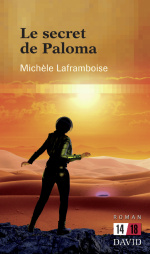
And generally, many of those details are about the characters interacting with their environment. I tend to follow the rule of three mentions, adding at least two instances of the details, so it sticks in the reader’s mind. For instance, in my novel Paloma’s Secret, one of the teenagers had a favorite and fun catchphrase, that I only found out about in the last chapters. So I went back and change the dialogue to add the catchphrase in the first chapters.

Do I write in order from word one and not stopping to the end? Nope. I have novels that begun with one impressive scene, plus the prequel and consequences woven out of the strong scene. Or a novel is a tiny seed that grows and grows.

Yes, my first efforts looked like a very convoluted garden hose.

As for my recent efforts at story-telling, you might get to see one very soon in the next issue of Asimov’s Science Fiction.

A Lady Byrd Story

An owl perching
image from Canva.com

Superb Owl Day

For the first time, fearless Amanda Byrd must mind her turbulent grand-niece while on a special birding excursion, on the day of the SuperBowl.

#

Our sharp-eyed guide pointed silently towards one of the husky, snow-powdered spruce branches. There, its mottled cream and caramel-brown plumage almost invisible against the tree background, its pale heart-shaped face marked with the dark marbles of its eyes, was a discreet nocturnal bird doing its best to avoid the sharp daylight.  

You rarely got to see a Barred owl from such a close distance, in a cold February afternoon, a meager dozen feet from the trail our small gaggle of birders was following. I didn’t even need my 8×42 Bushnell binoculars to take in its 22-inch long body from head to tail. I felt I could just stretch an arm to brush the fine down on its roundish head.

Well, not that I would do such an impolite gesture in front of my small niece. But my sister’s first grandchild had no such qualms herself.

“Hooo, hooo!” Mona said, her bright red mittens cupped in front of her mask, her brown eyes full of glee.

The owl’s neck moved like a tank turret to investigate the disturbance, one abyssally-dark eye blinking under a fluffy cream eyelid.

Most owls had gaudy-colored irises, orange or gold, framing round pupils; Barred owls had obsidian eyes, like black glass, the irises indistinct. Owl’s eyes were not slitted like cats’ to minimize incoming light, so the nocturnal bird protected its sensitive retinas.

Its downy eyelids, lowered at half-mast, gave him a perpetual air of either wisdom or sleepy annoyance.

Some owls’ tufted feathers reached out in points, like the Great horned owl, but this owl’s tapered along the round head.

When the owl’s head moved, Mona hooted happily.

“He looks like caramel ice cream with nuts!”

Count on children in the dead of winter to talk about ice cream, I thought, shivering.

The bird’s colors rather reminded me of an ill-fitting wool pull one of my own “aunties” had knitted for me (forgetting that teenage years were also growing up years) with a pattern of creamy whites and spatter of light brown stitches, at odds with the gaudy colors the sixties era favored.

I wore it for a time, to please my aunt, and as a camouflage to observe birds, Eventually, the mites found it. My mother unraveled the pull and knitted a warm scarf with it. Now that scarf, decades later, I wore in my winter bird watching, those muted hues being less aggressive.

I breathed in the cold air through the scarf and my thin face mask. The low temperatures prevented me from getting the scents of pine and fresh snow, but the odor of old wool impregnated with my mom’s patience remained present. I wore a heavier daypack with a thermos and collation.

But at least, it was a rewarding activity to go birding on the ‘Superb-Owl’ Sunday, as birders called this day. The name had been coined by a passionate birder in the 90s, and since then, many bird-lovers found out, in cities and woods alike, how quiet that peculiar Sunday was. The usual troves of weekend hikers also dried out on that day.

At this moment, my nephew, along with half the United States population, was lounging on his living room couch watching football players as colored as birds disputing a spectacular waste of money. (I’m told the commercial spots alone cost several millions.)

Meaning that, on Superbowl day, our small group of dedicated birders had the huge park near Albany, NY – and all its birds– to ourselves.

Including our own elusive, superb owls.

“Hoo, hoo!”

That is, if one of us did not scare said birds away with her bubbling enthusiasm.

Continue reading

I fell down a rabbit hole… (The joy of researching)

2020MicheleMontreTard800

I did it again!

I am researching for a SF novel in preparation (the specifics I keep to myself for now) and, one interesting site after one fascinating site, found out that time compressed itself and most of the afternoon had fled down the rabbit hole!

I do not know if my scientific formation aggravates this time-sink habit. I hold a Master degree in geography, and so many aspect of macro-ecology do hold my interests!

Plus, even the very day-to-day concerns penetrates my Serious Writer mode.  From the over-usage of single-used plastics that keep turning up in the remotest places or the oceans, to the waste of my own pens and stylus, to the upcoming Great Backyard Bird Count, and my own, heart-warming geek love Valentine day short-story…

So, all those tiny bits cluttered like a planet aggregation process, dissolving my focus. Already 16h00?

As I mentioned previously, most of what I ‘m noting right now won’t ever make it to the novel you’ll read somewhere in the next year. Some of those, if I can’t place it in the novel, will turn up, greatly compressed, in one or two exploratory short-stories, set in the same universe.

What I will NOT do is integrating all that painstaking-ly gathered tidbits into the novel itself, under the form of some extra-large infodump, (or a rather lengthy explanation by a secondary character that will get killed in the next chapter).

Research as an iceberg

See research as the hidden part of the iceberg. What floats if what the reader experiences. If you tried to pull more of the iceberg over the water level, like I did in my first books (fortunately Daniel Sernine, my editor of the time, detected it) you would end up with an indigestible lump of details that weights down the storytelling.

Yes, I was one of those very interested in sharing all those cute details!

Yes it is soooo tempting to have your characters stop on a ridge and describe the wondrous landscape in excruciating details, over two or four pages! It is more palatable if the description is shorter, and punchy, like this one from a WIP:

The dunes went on and on, a pale sandbox barely contained by a row of angry mountains, each chipped and corroded summit vying for predominance.

Most of the research iceberg must stay invisible!

Solution is not dilution!

To keep our focus, it’s good to set limits, to avoid diluting our attention.

One solution in time management is to do the research after you complete writing a certain set number of words for the day. This is Kristine Kathryn Rusch’s method to limit the time spent in research. She also manage to get her research done before writing the novel, while she’s finishing the previous book.

Not the way of Dean Wesley Smith, who does his research as he writes, because some cool factoids will influence the story telling. I know it happened to a short-story I was researching for.

One obvious solution is to restrain the time passed on the social platforms. Or retire completely from social media in a period of rush. Julie E. Czerneda mentions it.

My own is setting a timer. Sometimes the amount of time is not enough and I prolong the time. Still work to do.

Or I use this experience to write a blog entry.


TL;DR : I lost time surfing the web for my research. Some remedies may apply


Flash news:

I had the joy of discovering that my last published SF story in Galaxies 60 (in French!)  is on the selection for the Grand Prix  de l’Imaginaire 2020.

Writing Oneself in a Corner

The author writing herself in a corner

You know this famous joke about the guy who paint all the floor … to get caught in a corner, surrounded by a freshly applied layer of paint?

I do not know if you are like me, but there isn’t one story where I did not commit this blunder in writing… Even when I had a plan!

Last time, I was so hesitant that I missed a contest. It was a historical fantasy thing that worked perfectly … as long as I did not notice a 5-year gap in the dates!

A head-banging puzzle!

It was terrible conundrum, a head-banging puzzle: either I changed the date and the age of the main character, and the plot fell flat. Or I kept the factual error by arbitrarily changing the year, and it was a great story. (The story being in submission, I do not speak more about it).

I should have done more research. The mistake would have jumped in the face and it would have given another story.

I am happily preparing a series of historical mysteries following Domus Justice. (published in Fiction River 27, edited by the talented Kris Kathryn Rusch)  I realized that — I who adore the antique period – I took liberties with the plans of the Domus (house) in question. Moreover, it was not clear where were the toilets, hum!

So, in the subsequent stories, after serious re-study of the plans, I saw that I misplaced the altar of Lares, in a corner of the back garden. Heaven what to do? See this Wikipedia entry for a layout.

In this case, I decided not to change anything in my text about this site … and to pay more attention next time!

In establishing your historical setting, you have to “do your homework”! But be careful not to stretch this search time indefinitely …


Following the right tracks!

PointAuPointB600

I’m also wading into writing a crime novel (technically, a mystery). I found out that I sent my shy heroine twice to the same place. It allowed me to insert a beautiful sequence in the center of the novel … And to advance the investigation because she discovers a special clue.

But, what my heroine already knows when coming back to this place breaks some of the reveal progression, the tension. In addition, I have a bad tendency to multiply the oppositions when only one could do the trick. In short, have I put too much, diluting the danger?

Ah, la, la … I’m not out of the woods!

In a detective novel / polar / suspense where all the details must converge towards a strong resolution,  painting myself in a corner (whereas I made a plan, I recall it!) led to a catastrophe. I got embroiled in my tracks, adding motive over motive for my villain, to be certain that the assassin had a strong incentive to act!

I have not solved this problem yet, so I’m working on another creation while letting my creative subconscious search for a viable solution.

2018MichelePUSpogneeDansUnCoin


And you?

When was the last time you “wrote yourself in a corner”?